




























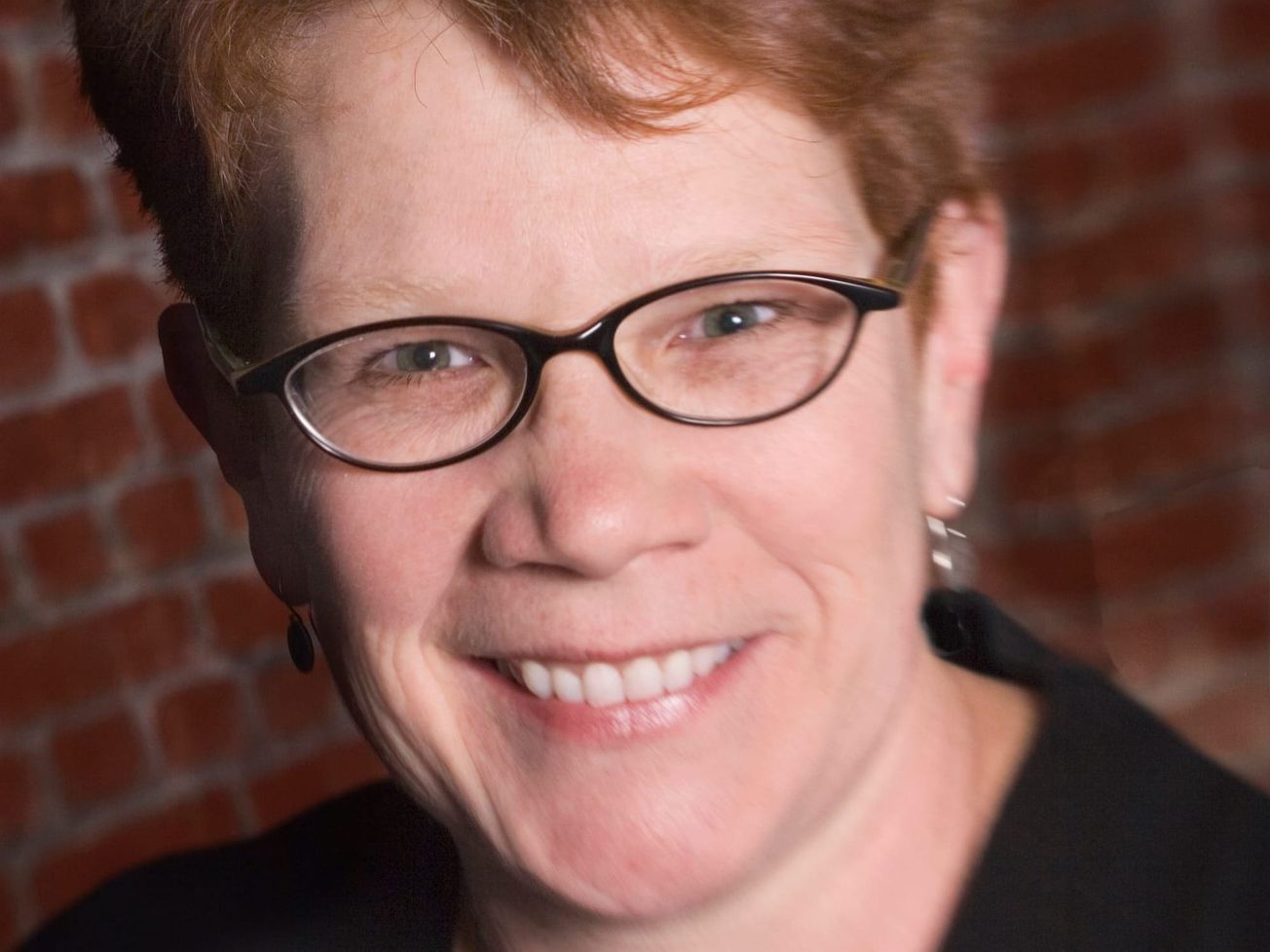
As a young girl, Sue Frost fell in love with musicals on television. “‘Peter Pan,’ ‘Cinderella’ and then there was ‘Funny Girl,’” Frost remembered. She didn’t grow up in a theatrical household. Frost essentially found her love for theater — and what would become her career — flipping through channels.
Frost earned a degree in theater from Smith College. During multiple undergraduate summers, Frost worked for the Berkshire Theatre Festival — taken under the wing of theater producers like Spofford and Patricia Beadle, Barry Brown, Fritz Holt and company manager Charles Willard.
Willard was company manager of the first international bus-and-truck tour of “A Chorus Line” (a North American tour by today’s standards, since Canada was the only stop outside the U.S.). Willard brought Frost on as assistant company manager, and when Willard left, Frost stayed for another year. She loved “taking care of people” and continued a career in Broadway company management when she returned to New York. Her debut Main Stem credit was assistant company manager on “Little Johnny Jones,” followed by “La Cage aux Folles” and then company manager of “The Rink.” Company management is only as fun as your company, according to Frost, and she didn’t see it getting better than “The Rink,” so she looked for her next step.
Though company managers typically become general managers, that trajectory didn’t interest Frost. She took time to regroup, and then the Goodspeed called. Then-executive director Michael Price wanted help rebuilding his production staff. Frost came in as a production coordinator, “thinking I would be there for the summer,” said Frost. “And I was there for 20 years.”
She scouted shows, put together creative teams and eventually produced approximately 250 shows between Goodspeed’s two venues, 50 of them in its smaller Norma Terris Theatre. Frost said those two decades were extremely rewarding, but she also mourned the fact that she could never give a show enough time. “When you’re doing six [a season], you get one up and you’re onto the next,” she said. “I watched so many interesting new musicals not get to that next place because I couldn’t do it.”
But as an independent producer, she could. Frost teamed up with Randy Adams, managing director of TheatreWorks Silicon Valley from 1984 to 2006, to form Junkyard Dog Productions. Although they hadn’t intended to produce for Broadway, they realized the necessity of a Main Stem credit to gain legitimacy. The first show they produced was 2009’s “Memphis,” which went on to win the Tony Award for Best Musical. They produced the shorter-lived “First Date” and then the global-hit Tony-nominated musical “Come From Away.” Today, Frost and Junkyard are focused on their new musical “The Heart,” which played La Jolla Playhouse and will bow Off-Broadway with Roundabout Theatre Company in October. Written by Kait Kerrigan with a score by Anne and Ian Eisendrath, the musical begins when a young surfer loses his life, but his heart could save another. The story follows two families and one medical team as they determine what will be next for the heart. Junkyard also has musicals “3 Summers of Lincoln” and “Freak the Mighty” in development, and Frost is the board chair-elect of the Broadway League. She will take her post in 2027.
In this busy time for Frost, Broadway News talked to the producer about the winning strategy behind “Come From Away” and whether it’s replicable, the importance of group sales and the relationship between Broadway and the road.
You spent 20 years producing for the Goodspeed audience. When you shifted to independent producing, were you attracted to the same shows and did you produce the same way?
Sue Frost: It does change. When you are a commercial producer, particularly a commercial producer on Broadway, you have to know that what you’re producing has the potential to reach 10,000 to 12,000 people a week, which is very different from 398 people [per night] at the Opera House and 200 people at the Norma Terris [at Goodspeed]. And because of the not-for-profit infrastructure, particularly in the earlier days when I was there, we could really afford to experiment and put on work that didn’t necessarily have to sell every ticket.
Is there a specific attribute that renders a show viable for 10,000 people a week versus 1,000?
Frost: Some of it has to do with stories. Some of it has to do with emotional heft. Some of it has to do with the music.
Meaning greater emotional heft for a larger audience?
Frost: It has to emotionally resonate with a variety of people. Which is why everything we’ve done commercially we’ve tried out in a regional theater, because you learned so much from an audience there. “Come From Away” is a perfect example of a show that we didn’t know what we were going to do with it [in terms of its production life]. We just loved it. [The first regional run at La Jolla Playhouse,] the show was a limited run, and there were limited numbers of tickets. We saw how quickly those tickets sold and repeat people coming back and bringing other people. The other thing that was critical: People walking out of the theater talking about it and strangers talking to each other who didn’t want to leave. All of those things that make you go, “Huh.”
We had built in the co-production with La Jolla and Seattle [Repertory] very specifically because we wanted to see it with two different audiences. [Audiences] go to La Jolla to new musicals that Chris Ashley directs. Their audience was used to that. Seattle Rep, they hadn’t done a new musical in 25 years. But [the Seattle reaction] was the same. Then you’re also like, “That’s two audiences on the West Coast. That means absolutely nothing in New York. We’ve got to come east.” We knew we had to go to D.C. because we had to be some place impacted by 9/11. And we really needed to go to Canada because it’s a Canadian story.
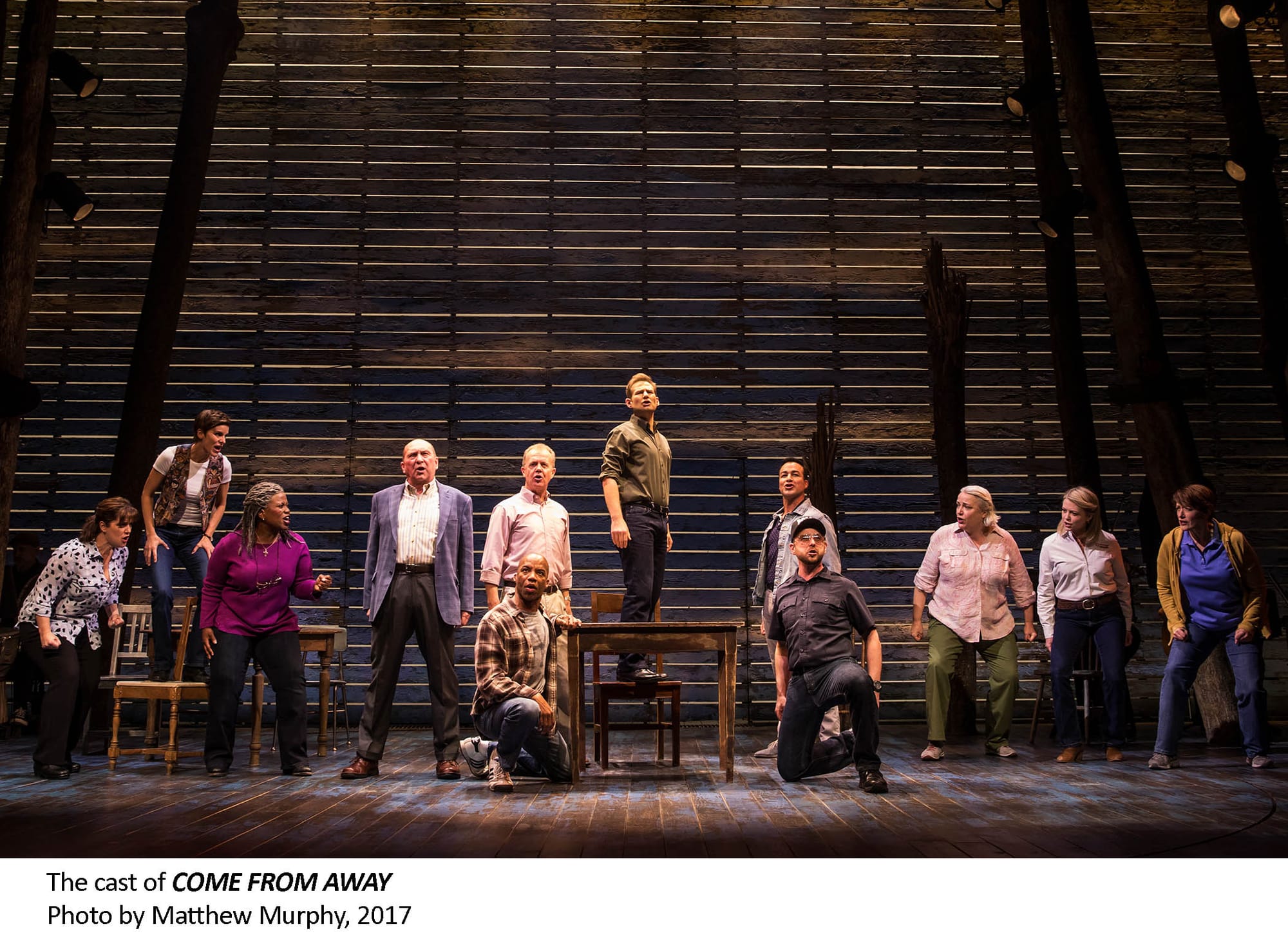
You established wide appeal by having multiple tryouts in these varied regions. A regional tryout, or even doing a co-production between two regionals wasn’t reinventing the wheel, but doing four seemed unique. Could it make sense to produce a show with that many out-of-towns again?