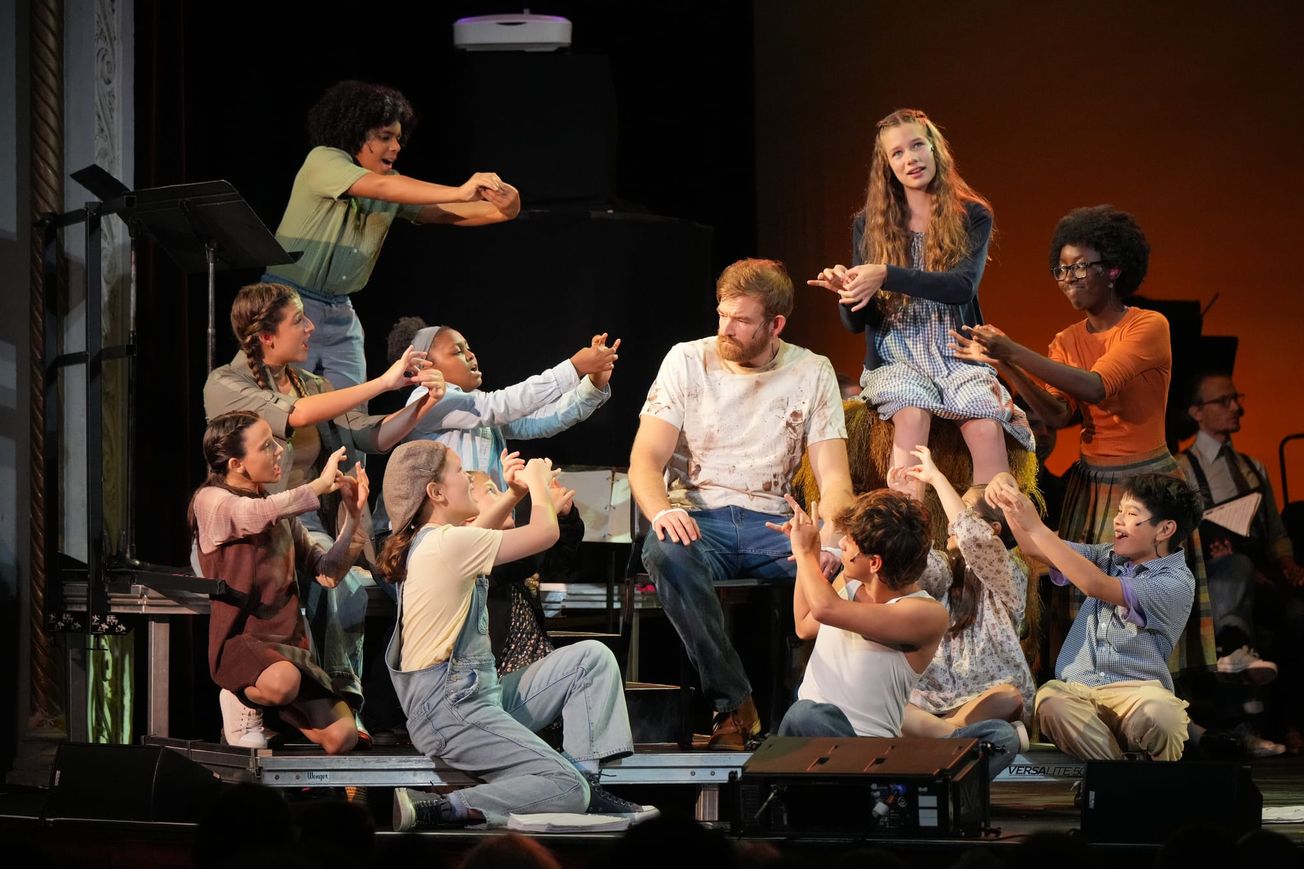















In February 2022, Music Theatre International (MTI) acquired the licensing rights to “Dear Evan Hansen,” announcing the acquisition about eight months before the end of the hit show’s Broadway run. Three-and-a-half years later, the show became available for theatrical licensing, allowing regional theaters, professional theaters, community theaters and schools to request and pay for the right to perform the musical on their stages. Between acquisition and availability, book writer Steven Levenson and composer-lyricists Benj Pasek and Justin Paul worked closely with the licensing company to make sure their six-time Tony Award-winning musical — about a lonely, awkward teen whose lie spins out of control — would be as much a hit in these secondary theatrical markets as it was during its six-year Broadway run.
“I remember being a bit overwhelmed by how much we needed to figure out,” recalled Levenson. “There were questions with school productions about vocal range and language — not just the obvious things like the F-word, but also in how characters talk about self-harm. But the big question was: Can this cast be larger than eight people?” (The answer turned out to be yes — it can now be performed with as large a cast as preferred.)
For many creators of plays and musicals, the results of revisions made for licensing are worth the extra effort. Licensing is a major part of the global theater industry and a key to extending the lifespan of a piece beyond the few blocks of Broadway. While writers maintain full ownership of their stage works and the freedom to adapt them into books, movies, TV shows and other projects, licensing houses essentially act as theatrical agents for the material, facilitating productions for performers of all ages, professional levels and in regions all over the world.
“Our clients are the writers, and our customers are the producers — and by producers, I mean everything from a major commercial producer to a teacher of an elementary school,” said Sean Patrick Flahaven, chief theatricals executive of the licensing house Concord Theatricals. “No author who has spent years writing a show and finally gotten it produced wants to just have it sit on a shelf and hope for the best. Many shows, whether they were successful initially or not, have found great success in licensing and made a living for these writers.”
Picking a licensing house — and a plan
Authors choose which licensing house will represent their work, usually after their show has completed at least one professional production. After the producers of a piece have exhausted their first-class rights — required for Broadway productions, national tours or high-profile regional runs — licensing companies pitch to writers, offering their company’s plan for the work’s prospects in the secondary market. The projected path might be traditional, beginning with large professional theaters and then community theaters and schools; it can also be the more unconventional but increasingly popular route of aiming directly for the educational market, sometimes while a touring production is still traveling the country. Of course, some shows go straight to licensing before a first-class production; in that case, an author typically approaches a licensing house with their work and a request for licensing representation.