


































The work of Tectonic Theater Project, from its famed “The Laramie Project” to its latest endeavor, “Here There Are Blueberries,” is often referred to as documentary theater. But Tectonic founder and artistic director Moisés Kaufman begs you not to call it that. “I’m a little bit allergic to the term ‘documentary theater,’” Kaufman told Broadway News, “because I don’t feel like that’s what we do.”
“I feel like documentary is this thing of: These are the facts. And, in our plays, we always have the people who are gathering the facts [at the] center,” Kaufman continued. “So in ‘The Laramie Project,’ we had the [Tectonic] company center. In [‘Here There Are Blueberries’], these are not the facts. This is what Rebecca Erbelding saw.”
That said, “Blueberries” is absolutely based in history and true events. Dr. Rebecca Erbelding is a real-life historian, educator, curator and archivist at the United States Holocaust Memorial Museum. In 2007, Erbelding was the archivist who unboxed a photo album sent to the museum. The album appeared to contain photos of Nazi soldiers and secretaries on their leisure time during the Holocaust. After investigating and verifying the identities of the people in the photos, the news of what is now called the Höcker album spread internationally. Kaufman read about the discovery in the New York Times and wondered, “Is there a play here?”
Tectonic company member and playwright Amanda Gronich said, “No, it’s impossible.” But through experimentation, Gronich and Kaufman found a different answer. There was a play there.
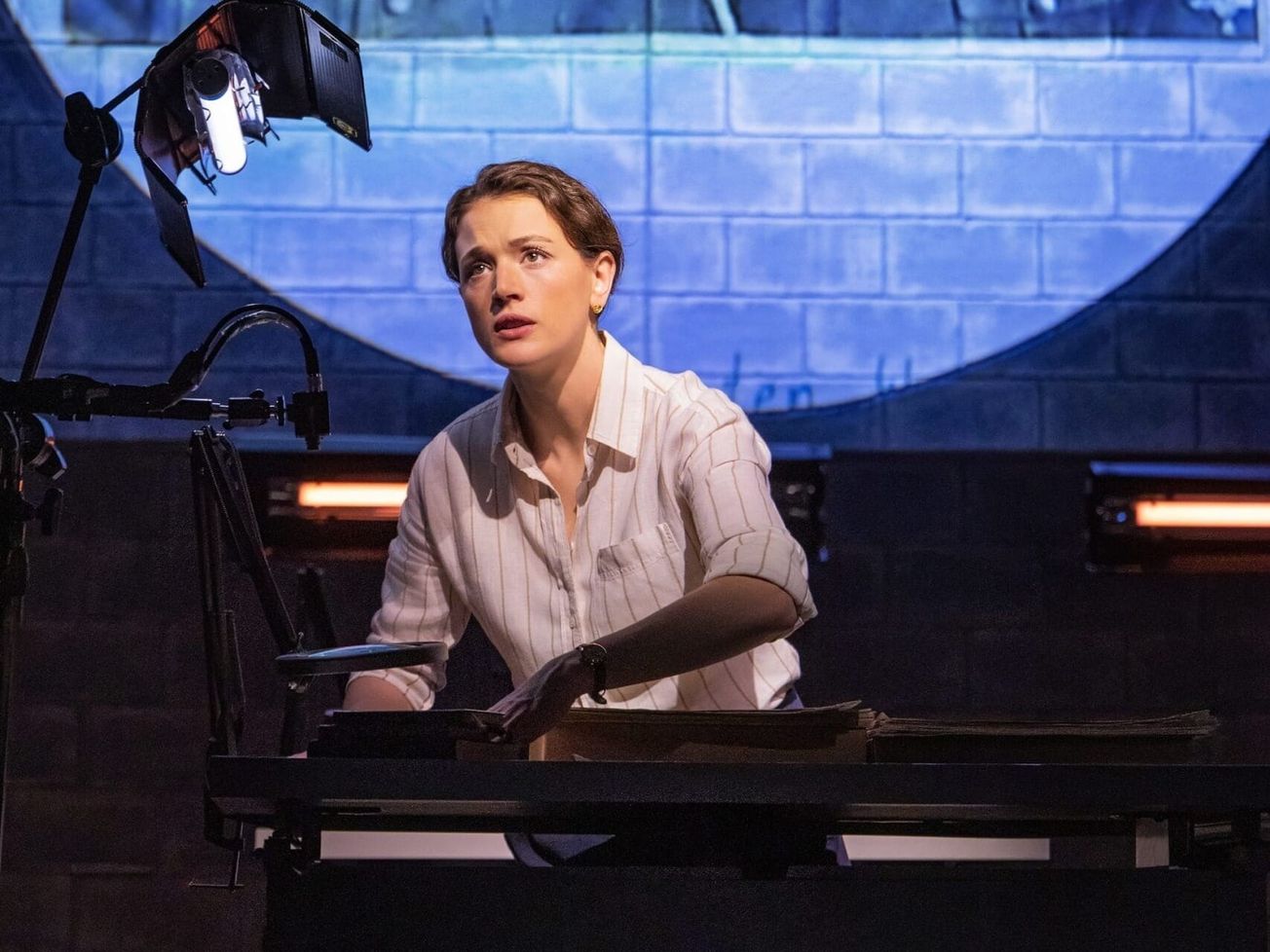
That play became “Here There Are Blueberries,” co-written by Kaufman and Gronich and directed by Kaufman, which premiered at San Diego’s La Jolla Playhouse in 2022 and has since played multiple regional theaters and Off-Broadway’s New York Theatre Workshop. The play, which was named a 2024 Pulitzer Prize finalist, has finally transferred to Broadway. It’s currently running at the Ethel Barrymore Theatre after officially opening on Nov. 9, the date which also marked the anniversary of Kristallnacht, the 1938 nationwide Nazi pogrom against Jews in Germany (which by then also included Austria and part of Czechoslovakia). At the center of “Blueberries” is the character Rebecca Erbelding, very much modeled after the real Erbelding, and audiences follow her as she works to solve the mystery of who is in these photos and what story these images reveal.
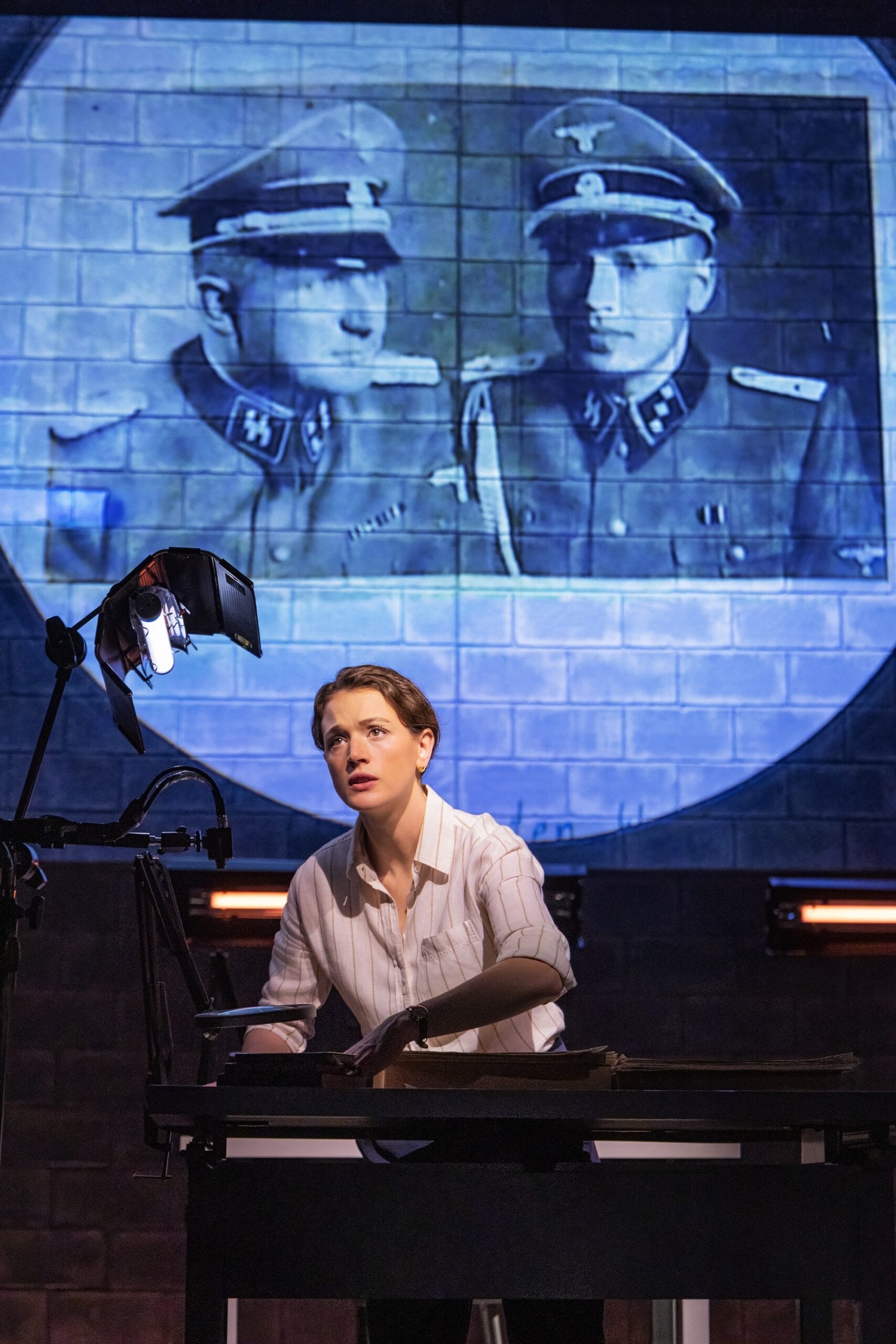
“Blueberries” takes its name from the caption of a photo in which SS personnel extol the paradise they are in — a place where a treat like blueberries exists. The death camp Auschwitz is just outside the frame. “When I first saw the photographs, I thought, How can they be eating blueberries next to a concentration camp? How can this behavior be happening?” Kaufman recalled. He wanted to try to tell the story of these photos onstage. Despite Gronich’s skepticism, she and Kaufman gathered actors and designers in a room to try and figure out in real time: “How do we tell the story of these photographs onstage?” Kaufman recounted. “There were three projectors in the room and every wall in the room had these photographs up.”