














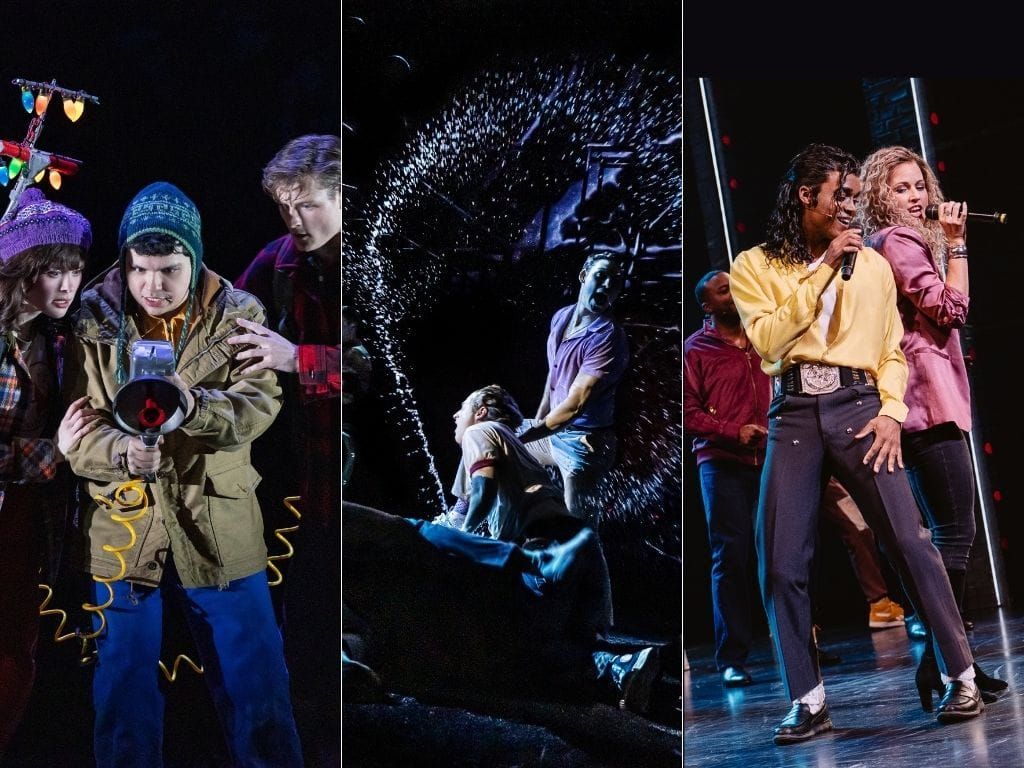
When sound designer Paul Arditti began working on “Stranger Things: The First Shadow,” he knew that the stage show’s audio world had to be as impeccable as the hit Netflix series, since a percentage of fans likely watched its five seasons while wearing the highest-quality headphones available. That can be hard to achieve for every audience member, especially in a proscenium house with more than 1,600 seats. But for the special effects and storytelling of a sci-fi horror play, it’s absolutely crucial.
Arditti utilized the latest technological advancements in sound design to make the show feel as vivid as possible. “For example, we have [creatures] that make noises and have minds of their own,” he explained. “In order to make that work convincingly, a sound needs to really seem like it’s coming from the thing itself. Almost everything that comes onstage that appears to make a sound has a little speaker in it, but we also use a directional sound system to be able to amplify that sound beyond the power of a little speaker into the overall sound system. That way, we can still make it loud, but we can still make it sound like it’s actually coming from that thing.”
Whether referred to as object-oriented audio, sound location, immersive audio, spatial audio or something else, this is the development that’s most exciting to the three Broadway sound designers interviewed by Broadway News as part of a four-installment series on technological advancements in theatrical design. What used to be astronomically expensive and cumbersome to execute is now relatively more accessible, as the capability is being integrated into various sound systems and softwares. And it’s so newly obtainable that the industry hasn’t yet agreed on its name.