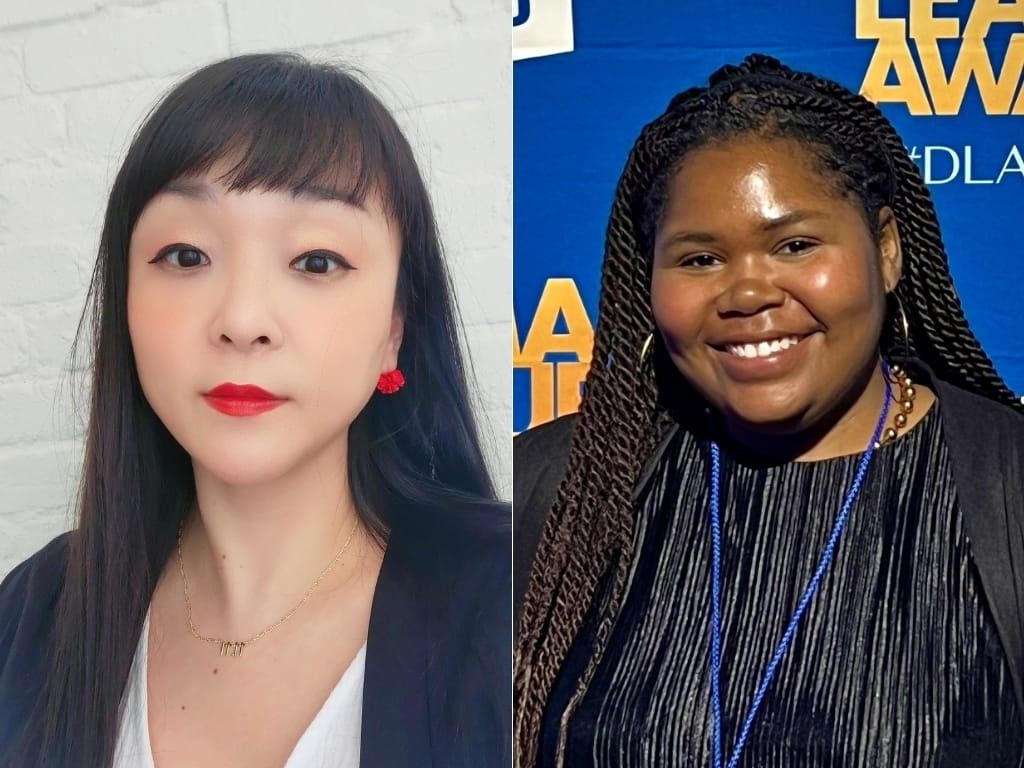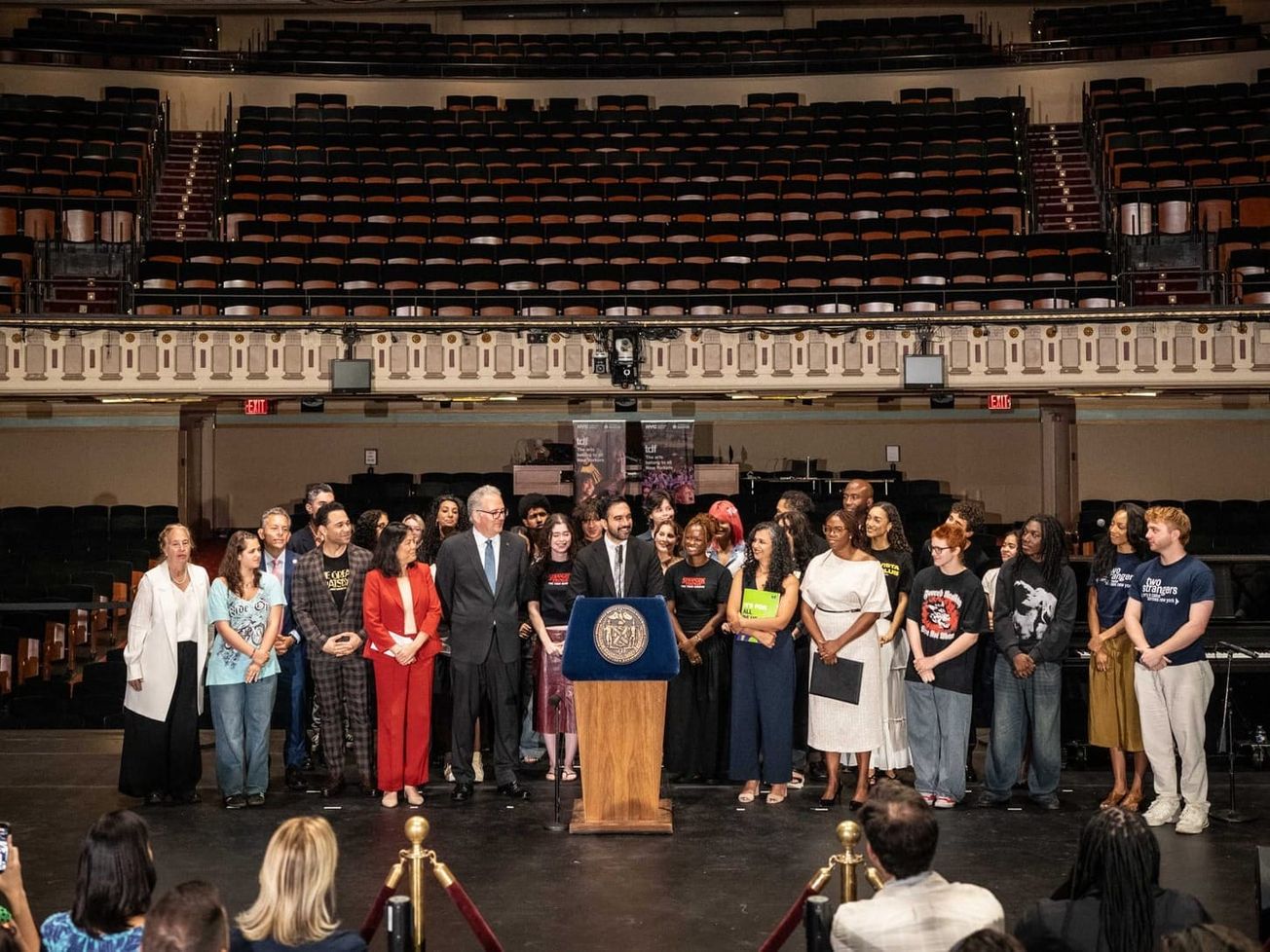







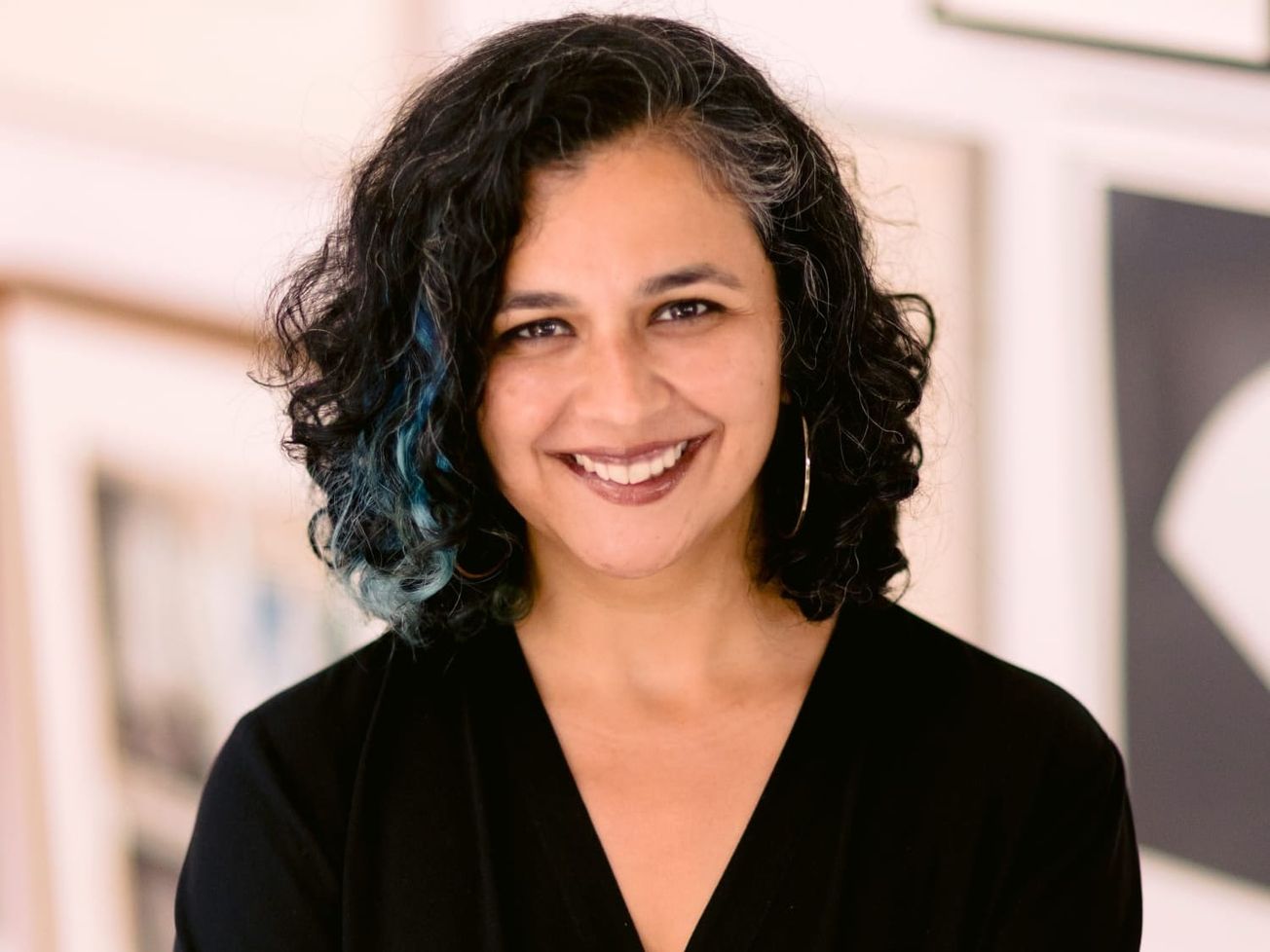
On March 9, advertising and marketing firm Situation presented TXB Remixed: The Producer’s Cut, an event convening Broadway and theater industry insiders to reflect on this current inflection point in the business. The format was very specific: Situation chose to screen eight videos of past TEDx Talks from previous editions of TEDxBroadway, which Damian Bazadona co-founded in 2011. Then, one designated speaker responded to each previous talk, in an effort to reflect on topics that remain core to the industry and to track how these areas have evolved. (Watch the replay here.) One such pairing was a TEDxBroadway Talk by Katie Sweeney in 2006 with a response from Deeksha Gaur, executive director of TDF.
Gaur prefaced: “In 2006, TDF member Katie Sweeney spoke at TEDxBroadway about TDF’s autism-friendly performances and the profound impact of this program on her son, Dusty, who has autism, and their family. Her talk, on the importance of making space for everyone at the theater, was touching, humorous in parts and, most important, a powerful call to action to an industry that had not traditionally made space for all its fans and passionate advocates. A decade later, with much good news to report about our industry’s growth in this area, the call to action remains more urgent than ever, not just for audiences, but for producers too. What comes next are my own remarks from TXB Remixed.”
The era of the audience is upon us. Ignore them at your peril.
My name is Deeksha Gaur and I’m the executive director of TDF. I stand before you, as Katie did almost exactly 10 years ago, to answer the questions: Where are we today as an industry? How have things changed? And where can we go next?
The good news: There is much to celebrate!
Since that first autism-friendly performance — or AFP — in 2011, we, TDF and Broadway have welcomed over 100,000 audience members to an AFP to experience art on their own terms. Some of these audience members still attend AFPs. Some, like Dusty, are now theatergoers at any performance. Every return is a win for the industry.
This incredible step towards inclusivity is a celebration of our collective growth as an industry. Every AFP takes a village. Your show’s creatives and crews adjust lights and sound, the front of house hand out fidgets and headphones and your marketing teams spread the good word that theater is indeed for everyone.
And as a sign of the progress we have made as an industry, producers are now proactively approaching us to secure their AFP date for the season. If you’d like to learn more about this or any and all of our accessibility and community programs, the TDF team is excited to chat with you.
But friends, this is just table stakes. We need to talk as an industry about audience development — not just as a programmatic endeavor, but as foundational to our industry’s longevity. At TDF, our purpose dictates that: “Every New Yorker must feel a sense of belonging in the performing arts.”
What this means is that audiences must be able to afford to build art into their regular lives, must be able to attend without discomfort and, that while they are there, they must be seen in their full humanity. When Katie talks about Dusty, she paints a picture of a person whose identity encompasses so much: his skills, his passions, his joys and his needs. Just like all of us. We do not need or want to be othered, pitied or isolated, as Katie shares. And when we are, we stop attending.
My provocation to you today is this: What if we, as an industry, could expand our purpose beyond just a commercial or artistic enterprise to one that also centers individual dignity. This is, after all, how we strengthen the future of our industry.
“But, Deeksha,” some of you might be thinking. ”We are a commercial endeavor first. And the math doesn’t math.”
Allow me to make a business case for genuine audience development at scale.
First, the opportunity ahead of us is too big to waste.
Nearly 1 million people in New York City live with a disability. That’s 11 percent of our city’s population. Broadway cannot afford to ignore one out of every eight audience members.
We also know that when people attend the arts, individuals and societies are better for it. Monthly (or more frequent) attendance of cultural activites can reduce the risk of developing depression by close to 50 percent.
Theatergoing increases propensity to vote and to participate in civic life and it fosters empathy, which we desperately need right now. And, it perpetuates a cycle of attendance, which we also desperately need.
Moreover, we are fast hurtling to a fully automated world. Very soon, the only guarantee of a real, human artistic experience will be face-to-face, in person. AI and automation could completely revolutionize our role in society. We must be ready.
Second, we know audience development as a business investment works.
Because TDF has been leading the charge for close to 60 years with close to 70 million low-cost or free entries to the arts, we know:
- The students who bought tickets through TKTS in the 1970s, are now buying your premium orchestra seats.
- Broadway royalty, like Norm Lewis, Francis Jue, Jerry Mitchell, credit a discounted TKTS ticket as the spark of inspiration that allowed them to dream their careers into being.
- Our education program participants have become innovators in their fields, makers in our industry and educators who are bringing the next generation to theater.
Third, we must name that neither our infrastructure, nor our incentives are aligned for systemic change.
There are a few concrete ways we can align our infrastructure with our goal of audience development. We should: 1) integrate accessibility services into a show’s capital raise, 2) designate a percentage of royalties to go into a mutual Broadway Future Fund, 3) continue individual philanthropy, which can be supported by TDF, 4) establish strategic partnerships and more. These tools can support the longevity of our field.
The era of the audience is upon us. And the opportunity ahead of us is enormous. And we at TDF, your tried and true audience development partners, stand ready to serve.