























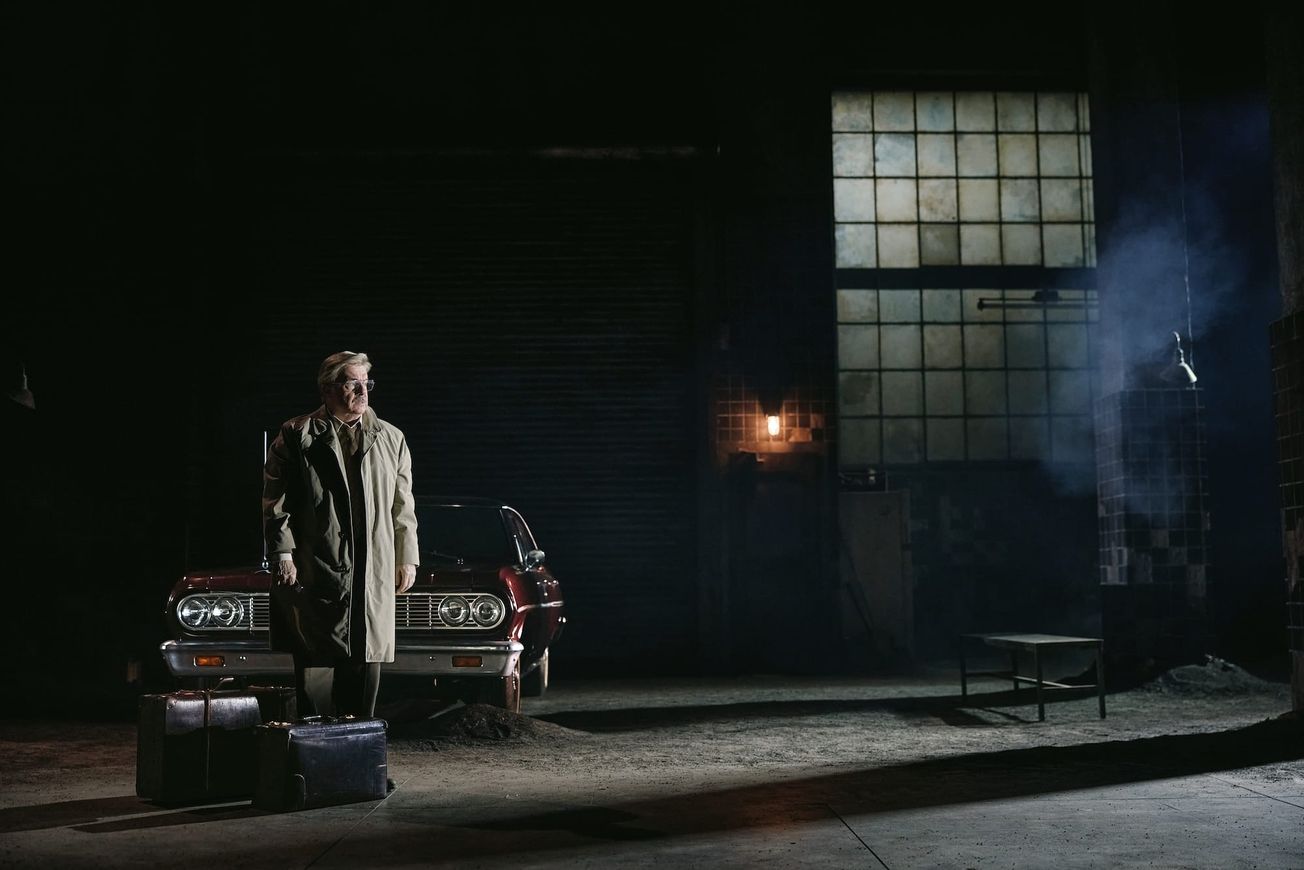
Director Joe Mantello was keenly aware that Broadway had recently experienced a “wonderful production” (his words) of “Death of a Salesman” just four years ago. So if he was going to do it, there had to be a reason. That reason lied in the visual world of the play. As Mantello previously told Broadway News, he was interested in the abstraction at the heart of Arthur Miller’s text. But he would need a team of top-notch designers to make such a physical manifestation of that abstraction hold the heft of this American classic.
Mantello found those co-conspirators, including scenic designer Chloe Lamford and lighting designer Jack Knowles. Lamford conjured a space that could serve as a liminality between protagonist Willy Loman’s idealized past and grim present — centered not around a house, as so many other “Saleman”s but around a car. Knowles filled her abstract set with light that communicates not only a sense of place (inside or outside, day or night, past or present) but Willy’s emotion. Both Lamford and Knowles are now Tony Award nominees for their respective designs for “Death of a Salesman.”
Here, they discussed the inspiration behind the groundbreaking designs, their collaboration with Mantello and each other and the details that imbue the story audiences have picked up on.
Joe mentioned that a big part of his approach was returning to what he saw as the abstraction within Arthur Miller’s text and that the scenic design would need to be simple and conceptual for that reason. Where did that set your starting point?
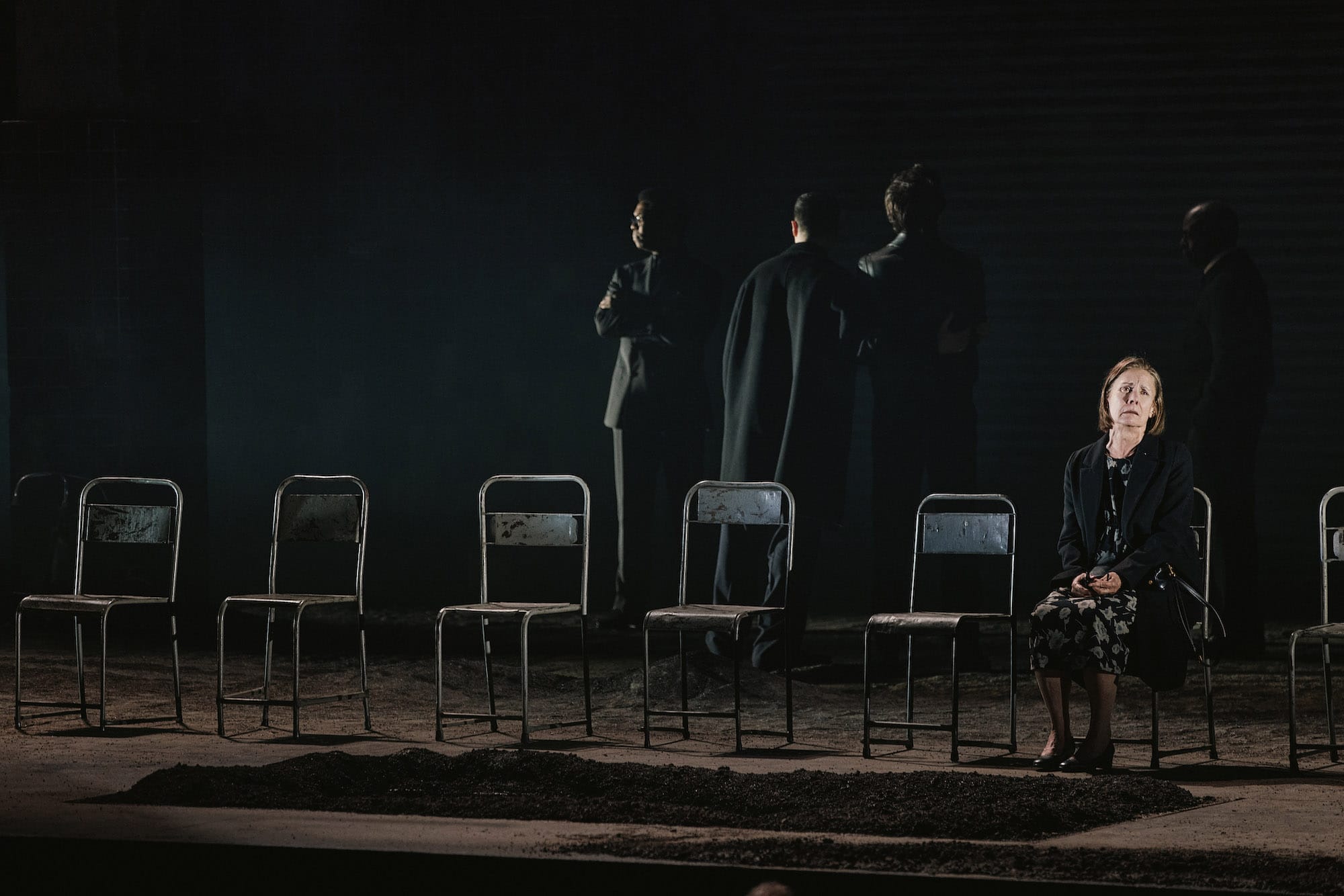
Chloe Lamford: I feel like we started with the death of Willy and this grave image [because] the subtitling of the play is “Certain Private Conversations and Requiem.” And we started off thinking about earth in a theater space. Then we landed in this mind space that was the garage — that the vessel of the play was his mind, but it’s holding objects. It was a place he could conjure his sons. And it felt like this relic of the car, being one from [Willy’s] past, gives this space of his dreams — and they’re fading into the theater and disappearing as he’s grappling with this moment, which is the end of his life. So it is dark and deep and portentous and all of these things, but it’s like we’re in his mind with him. It’s emotional space, and it’s subjective and poetic. It felt really important that it was poetic.
Do you recall the moment you settled on the overarching image of the set as a garage with a car parked center stage?
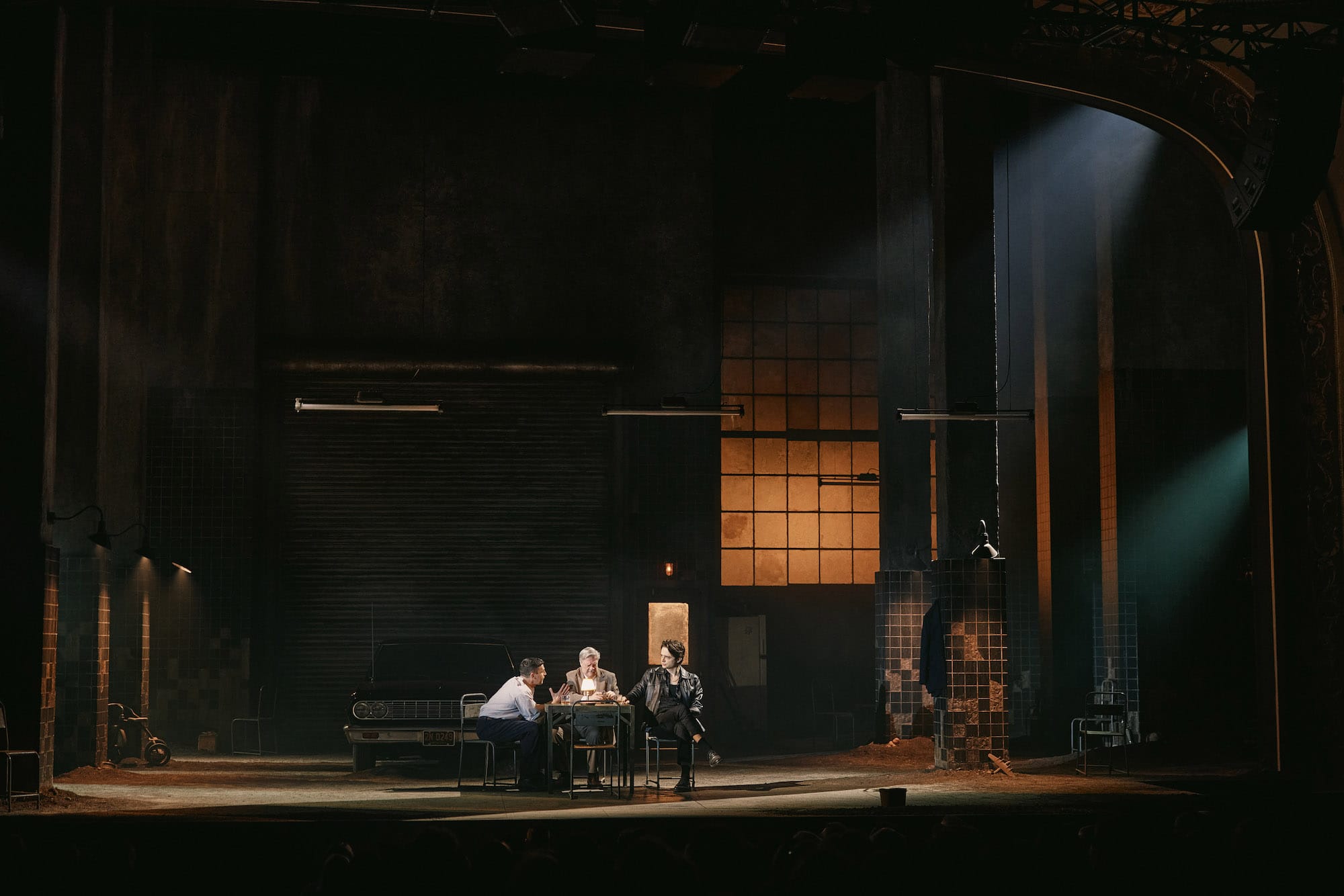
Lamford: It happened so sneakily because we were looking at this much more abstracted space, and I put this metal shutter [accordian door] in it that I really loved. I think it came from that — that we suddenly we gave everything a flavor of garage. It’s impossibly big, and it has these pillars that go off into the furthest recesses of his mind.
Jack, when it comes to an abstract piece, does lighting work overtime? The more abstract, the more demanding lighting is — or is that a false equivalency?
Jack Knowles: I want to say that’s a false equivalency, partly because most of what I do is abstract, but I’d say the starting point is always emotion and feeling. How you want the audience to respond and how you can create environments to allow actors to access emotions and go to really deep, serious places and take the audience with them. Almost every space needs a different feeling. So whilst we go from place to place — the kitchen, outside, into the house, the boys’ room — there’s a change of energy, emotion and intent that we’re supporting. If we were in a naturalistic set with bedroom here and bedroom there, we’d be facilitating scene changes and the emotion would still be the heart of what we’re trying to create.
The way Joe has staged Willy’s memories, not really as memories but concurrences — as Miller described them — blends past and present so seamlessly. How does the lighting facilitate that smoothness?
Knowles: The concurrences thing is so key in thinking about the show — not thinking of them as going into memory. These moments are happening at the same time in Willy’s head. So the open abstract space that gave us this huge expanse of mind allowed us to flick through, almost like flicking through a gallery book of images. It’s really about staying emotionally invested throughout without adding unnecessary air to the piece.
Lamford: It’s such a cool thing that you do, Jack, which is that you can flick between states, but make the space look outside and then it’ll flick and it will become inside. That’s so magic.
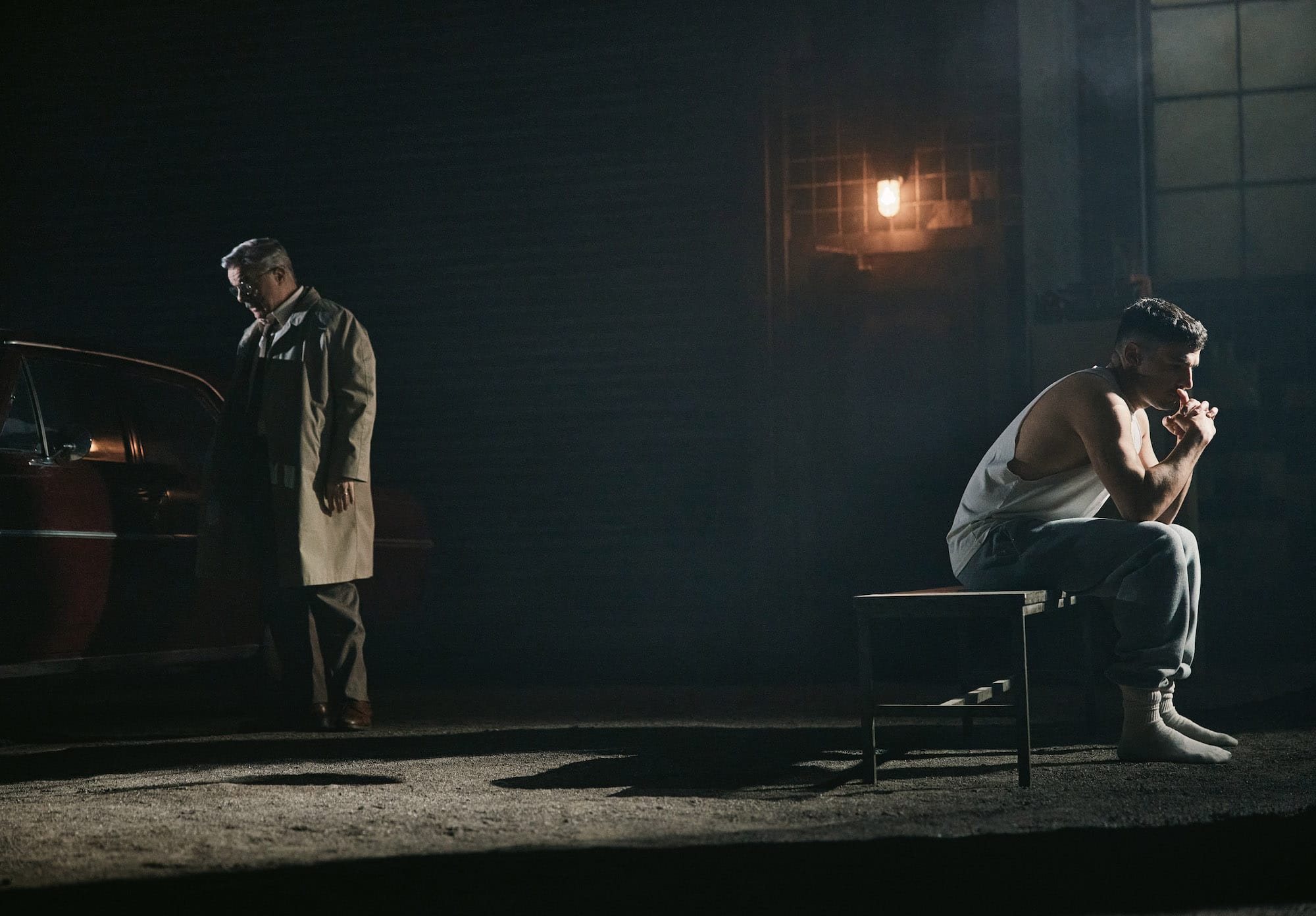
In staying fluid, there’s also stark contrast. Present-day Willy is often in colder, bleaker light and when his sons are young, it feels warm and sunny. Tell me about your process getting there.Knowles: It’s all about thinking about what colors and tones and shapes are imprinted in his mind from these moments of the past. The sons’ stories and the football field concurrences are about this very rich, hopeful, optimistic world — so this overly golden world. The play’s reality are deliberately starker. They’re devoid of color, like the life strains out of them.
Jack gave the analogy of flipping through a gallery book, which is funny because Joe mentioned that, Chloe, you two looked at art installations and gleaned inspiration from them. Can you tell me more about that?
Lamford: When we first got really interested in earth being texture and digging into the floor, we were looking a lot at this amazing installation by an artist called Urs Fischer, who literally, in a gallery, dug a huge hole. There’s also a really amazing artist, Olafur Eliasson, that uses nature and puts it in a room. I’m really interested in spaces where you collage two things or two spaces together. So [for “Salesman”] it was like, “How do you make somewhere that’s inside [and] outside?” We put this really strange little tree trying to grow at the back near the window, this tiny bit of Willy’s hope still going. So that came from a Tarkovsky movie kind of feeling.
The thing about installation are that is fascinating is that they use real [material]. It was so important that we found [as] real texture as we could and that with all the paint and everything. We really worked on all our samples so we could make things feel textural and solid to put somewhere that felt real against the gold and beautifulness of the Winter Garden. Then you have this really interesting tension.
Chloe, your renderings included detailed imaginings of the lighting. How does that clear vision come into play in your collaboration with Jack?
Lamford: I was doing those thinking about Jack, because Jack and I have worked together quite a few times now. I know his amazing musical breath and color and change. So that gold and all that haze [in my drawings], I make them thinking about you, Jack.
Knowles: It’s all knowing the style and feel that we want to create. We’ve all got to find the world that we want to inhabit. Some of the best conversations I have [are] after spending a few hours in rehearsal. The actors have done something incredible, and they’ve allowed you to see a scene in a new way, and you suddenly get an emotional feeling or life from it.
Joe said that you sat in on weeks of rehearsal and that — for his processes at least — that was rare.
Knowles: I can’t imagine not doing it, to be honest. I find it can be so forced if it’s like, “I need to grab the director, sit down in their lunch break and talk about lights.” It becomes very technical. You really want to get immersed in the world and the environment of the show.
The immersion makes it a fluid light experience. Is that right?
Knowles: Absolutely. The toughest question I’m always asked, “What’s your favorite moment, or what’s the bit people want to see?” And you go, “Oh, I really like that one or I love that one.” But you love it because what’s come before and what’s coming next. You love it because of how it works in synchronicity with everything, and the actors are all on a journey inhabiting these characters.
Jack sat in on many rehearsals, but Chloe, I know that you embarked on a separate process of balloon testing in the Winter Garden. You tied balloons to a weight and set them around the stage to imitate the placement of people. How did that inform the set?
Lamford: Joe wanted to find a real intimacy, and we really wanted to get the action down into the auditorium, but we didn’t want to do it too far. It was such a fine balance. So we did this mapping out with balloons in the auditorium to really feel: “What is the volume? What’s the area that we need to inhabit that gives us the most intimacy while still hitting all the sight lines we needed to hit?” We were making a big operatic gesture, but we also had to hold everyone. And the pillars that are really downstage do that because they kind of compress. But then with Jack, we can open up this vistas and expanses.
You are not only creating intimacy, the design team created this simultaneity of 1940s and today. What choices of yours help accomplish that?
Lamford: It was thinking about things in a nostalgic way. [Using] things that make us feel that breadth of the 20th century, but, because it has this decay, that also meant that we’re looking back on something that has age. It was really a gut thing.
Knowles: It’s all what you think of as a different era. Looking back in the past, you think of sepia photographs or the film noir era versus the film and TV world now where everything is so much smoother and more rounded. There’s less contrast in a lot of imagery we look at now.
Technical lighting question: Did you use all modern-day technology or were you mixing instruments from an older time and a newer time to produce different kinds of light?
Knowles: There is a mixture. The show is predominantly LED. The challenge I faced with LED is how to stop it looking too electric. You do these “cold” [moments] that suddenly look like lightning blue and it’s like, no, pull that back, get the dirtiness back. But then the images for the requiem — the funeral scene — that’s tungsten lights, which are very much on their way out. But the quality and the way in which the color changes as the light changes level — this very homely rounded quality — is what enabled that scene to totally shift the space.
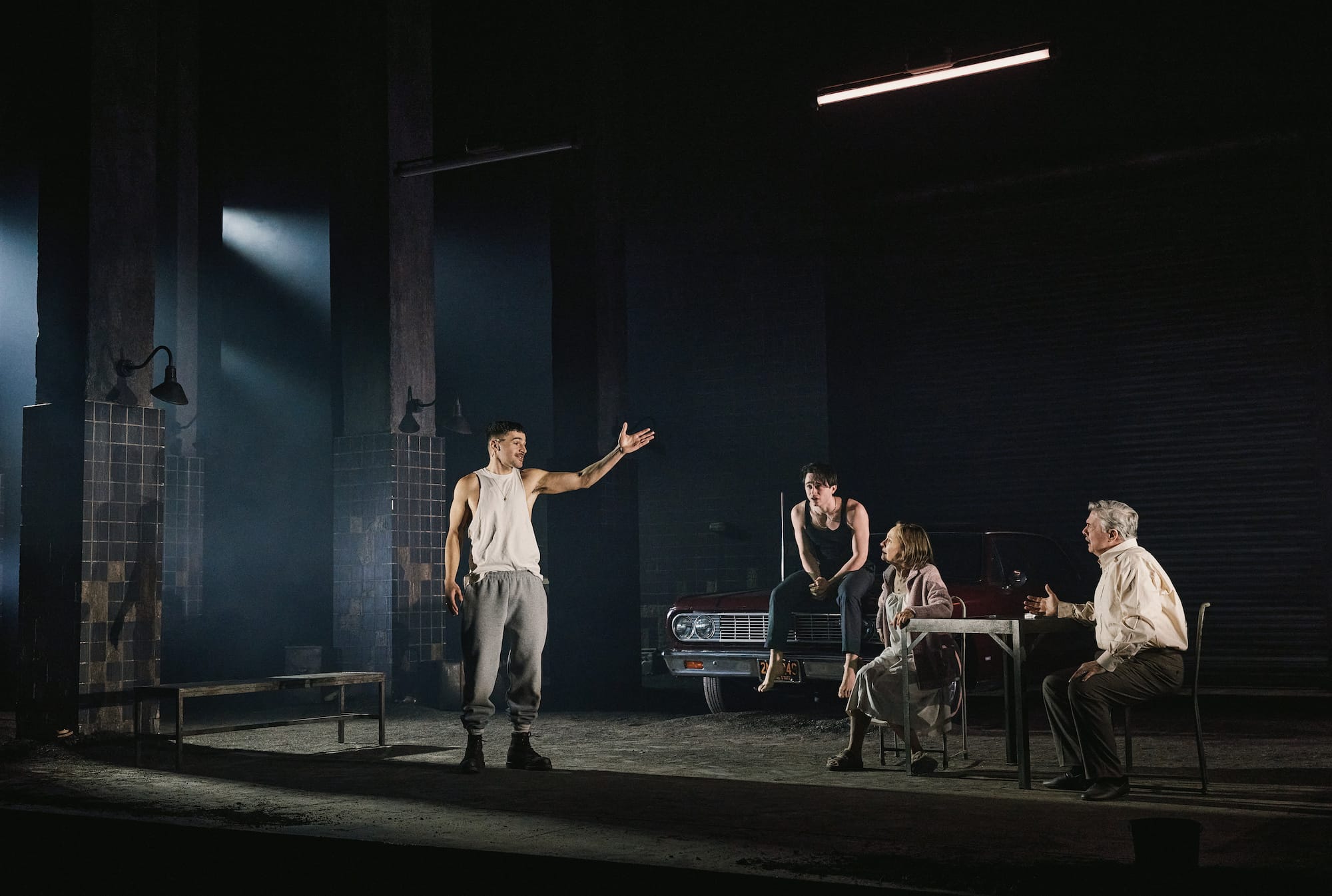
It also looks like you’re working with a lot of haze because we can see light beams. How do you work with something as unmanageable as air to get haze right?
Lamford: It’s so fun.
Knowles: It is so fun. A lot of trial and error. Placement and type of machines makes a huge difference. So there’s three different types of hazers, smoke machines, working away.
Lamford: And they’re hidden in parts of the set. There’s something you do with the haze in the latter part of the play, which just blows my mind, Jack. The way it hangs and the way you’ve lit it, I feel like I'm looking at art. It's proper amazing.
Knowles: There’s kind of trickery in it. Haze only looks as good as it’s lit. And the way different angles catch the haze does totally different things. So for the restaurant scene into the hotel scene, there’s a lot more — I want to say front light but his isn’t a front light show at all. That means that the haze sits in the space differently and you feel it. And as Chloe said, [hazers are] snuck in among the set. Those pillars are truly working overtime.
Chloe, I want to end on the objects sticking out of the dirt in your art-piece set. Every object seems deliberately chosen and placed. I want to know a bit about your process of choosing those objects.
Lamford: While I was talking to Joe, he was like, “How do we know that it’s a poetic space and it’s not a real garage?” I got this idea in my head of this kid’s little bike that sits near the car onstage right. And you’re like, “Oh, that was maybe Willy’s bike when he was tiny, or it’s one of the boys.” That bike was my weird obsession. Then there was a little sports trophy, there’s an airplane, these little fighting soldiers. They’re all things that are playful, signs of childhood. The anchor points were the tree and the little bike.
It seems to enhance the metaphor of the garage — the way we use our garages to store the things that we don’t want to deal with.
Lamford: The lost American Dream.