






































“You would be foolish to limit yourself to the things you know how to build.” That’s what Tony Award-winning scenic designer Rachel Hauck was told by her college professor, Robert Israel, and she revisits this piece of wisdom often.
“Scenic designers are responsible for how [a show] looks, how it works, how it feels,” she explained. In terms of her designs, Hauck said, “I have some big, demanding asks, and if it’s not possible or it’s out of the budget, the amazing artists and artisans I work with will tell me. But also, thanks to the technology that’s happening, some stuff that I think are impossible actually are possible.”
As technology evolves, designers are able to realize more of their imaginings — and even previous impossibilities — as onstage realities. These advancements are not only changing what designers are able to create, but how they work and collaborate with others — and how much it all costs. In the first of a four-part series, Broadway News spoke with three active Main Stem scenic designers — John Lee Beatty, Hauck and Dane Laffrey — about some notable technological advancements that have made parts of their jobs easier, less time-consuming or more fun.
Stay tuned for upcoming articles in this series that center on the technological developments impacting sound, lighting and costume design.
Rachel Hauck: detailed renderings

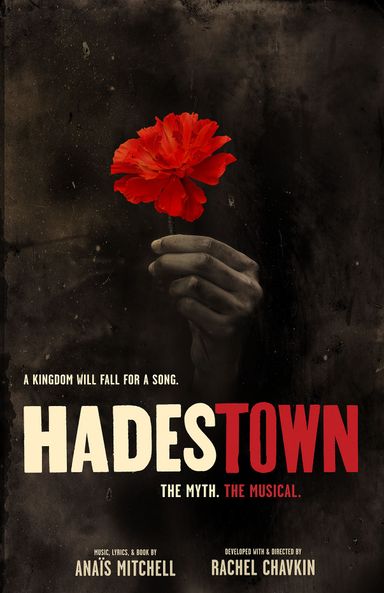
In 2019, Rachel Hauck won a Tony Award for creating the industrial-inspired underworld of “Hadestown.” This season, the scenic designer is looking to the stars for “Galileo,” a rock bio-musical about the renowned astronomer that’s set in Renaissance-era Italy.
“It’s a giant colonnade that’s all clear plexiglass with an exposed steel structure,” Hauck teased of her design for the production, which begins performances at Broadway’s Shubert Theatre in November. “There are moments when the set looks solid and then seems to disappear, which is amazing when you’re talking about going from Earth to space within the imagination of Galileo.”