












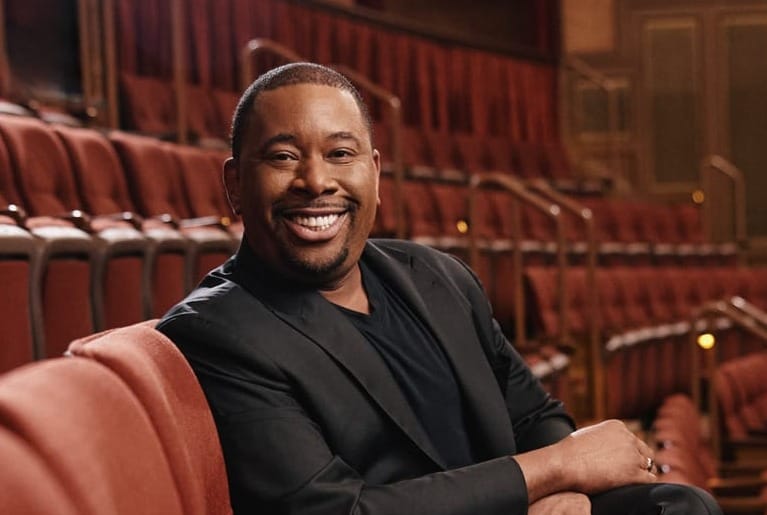
In Diamond Bar, California, a third-grade Brian Anthony Moreland asked his mother if he could be in the school play. She was a certified public accountant; Moreland’s father worked in a youth authority for the state of California — meaning, as Moreland pointed out, they were not a “theatrical family.” But Moreland’s mom said yes, and even made his Santa Claus costume. “After that,” Moreland recalled, “I wanted to do it again.”
Moreland went on to study theater at the University of Hartford and began his career acting in New York, when a gig line-producing a project led by Debbie Allen and Otis Sallid opened up Moreland’s eyes to producing. In 2014, his first project fell through. “I was devastated,” Moreland shared. His godmother, Candy Brown, who originated the role of June in “Chicago” (“He ran into my knife”), got Moreland a meeting with legendary producer Harold Prince.
“And the conversation went like this,” Moreland remembered. “‘If this is what you want to do, you’re going to have to find a lot of projects. There’s always going to be something that’s going to fall out, whether you have your money but you don’t have your stars, or you have your stars but you can’t get a theater. You have your theater and your money, but it doesn’t line up with the star’s calendar. Something’s going to happen, so you need to have multiple projects.’” Moreland took that to heart. He moved to London for a spell, and when he returned a friend presented him with the script to a new play, called “Thoughts of a Colored Man.”
“She goes, ‘Do you think I can do it?’ She was a white director. And I said, ‘You can do it. If you see the world through that lens, do it.’ I don’t have that particular hangup,” Moreland said. Then he asked if he could be in the play’s upcoming workshop, but playwright Keenan Scott II already knew who he wanted. As luck would have it, the choreographer needed a dancer for pre-production — and then someone dropped out of the cast, making room for Moreland. But as these things go, that workshop wasn’t going to proceed. “And I asked the playwright if I could produce it,” Moreland said. “That’s what started our journey.”
“Thoughts of a Colored Man,” in an entirely new production, became Moreland’s Broadway lead-producing debut. Prior to that, he had earned co-producing credits on “The Lifespan of a Fact,” “Sea Wall/A Life” and “The Sound Inside.” Moreland had taken Prince’s advice to heart. But despite trying to have multiple plates spinning at once, it took time before he could support himself as a full-time Broadway producer.
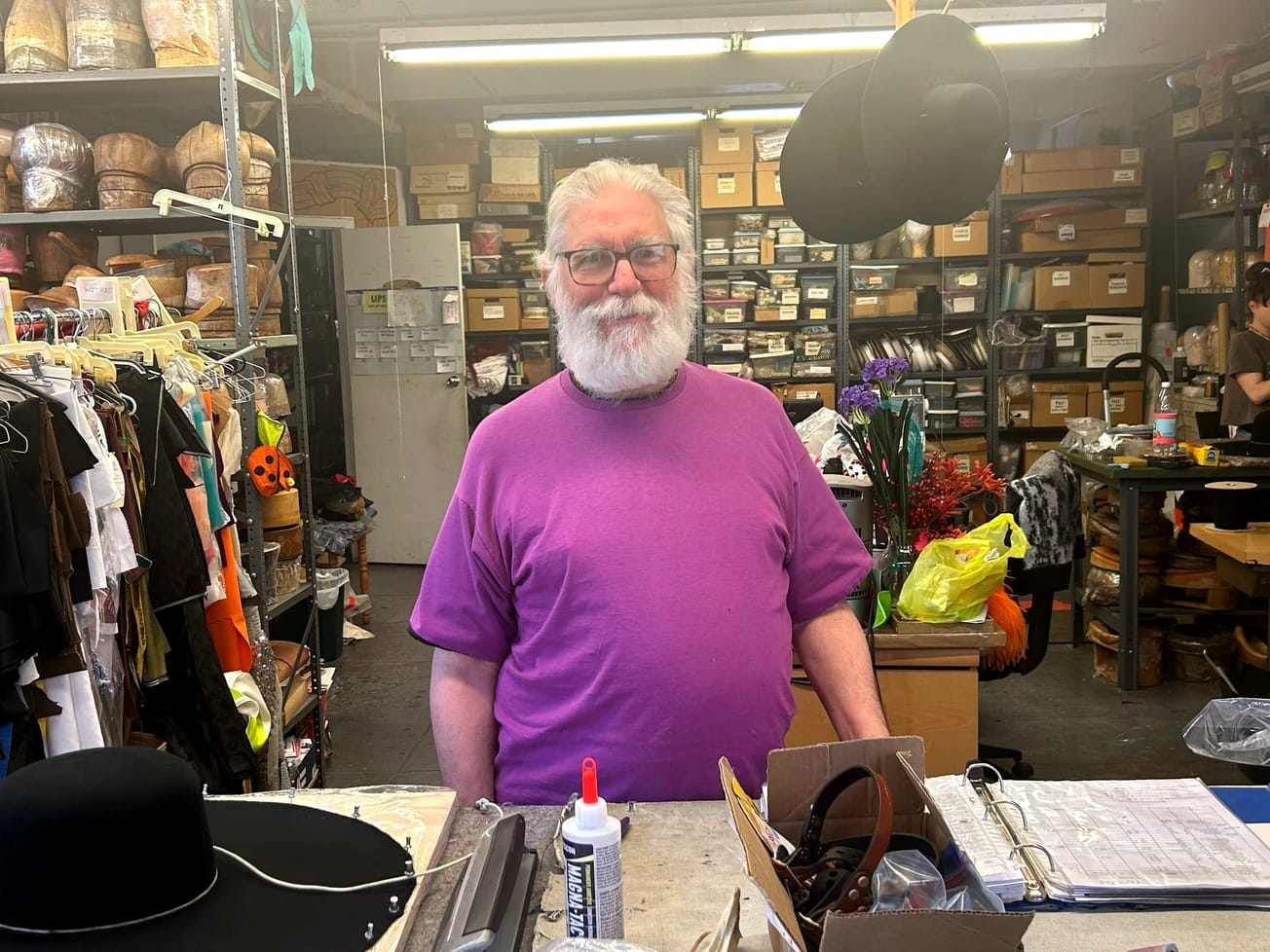
“You want to know what my survival job was?” he asked this reporter with a grin. “I was a wardrobe person.” Having inhabited multiple roles in the theater — actor, dance captain, usher, ticket-taker, line producer, wardrobe assistant — Moreland understands his shows and their operations firsthand from multiple departments and perspectives.
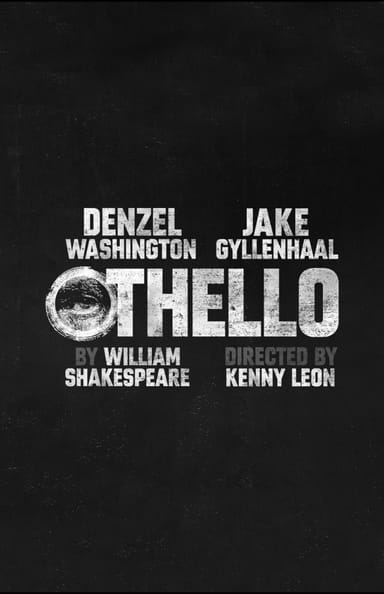
Since the 2021 bow of “Thoughts of a Colored Man,” Moreland has served as lead producer of the 2022 revival of August Wilson’s “The Piano Lesson,” starring Samuel L. Jackson and nominated for the Tony Award for Best Revival; the 2024 revival of “The Wiz”; and the 2025 revival of Shakespeare’s “Othello,” starring Jake Gyllenhaal and Denzel Washington and noted for breaking box office records. This season, Moreland is behind the 2026 revival of Wilson’s “Joe Turner’s Come and Gone,” starring Cedric “The Entertainer” and Taraji P. Henson, directed by Debbie Allen.
Here, Tony-nominated producer Moreland discusses his views on the state of Broadway, diversity in audiences and the need for grassroots marketing in the industry.
This conversation has been condensed and edited for clarity.
What constitutes the “Brian Moreland way,” so to speak?
Brian Anthony Moreland: Saying yes to the best idea — and by best idea, I’m not even saying it’s something that I can compare to something else. Take [the merchandising company] merchdot. [COO and co-founder] Brooklyn [McLain] was the receptionist at Foresight Theatrical. And I'd come in with “Thoughts of a Colored Man,” and he read it and he was like, “Oh, I really like that play.” Then one day I was sitting in the office at Foresight and he said, “If you ever would ever consider me for merchandise, we’re starting up. We’ve never done it on our own, but we have this idea. Would you consider it? And I said, “Absolutely. Put it together. Let’s see.” I don’t mean to be flip, [but] it’s merch. What can you do wrong here? I said yes, and now he’s doing all these other things. If it makes sense, it makes sense. I don’t question when somebody’s like, “Hey, I want to try that.”
Do you have a creative mission that drives what you say yes to or what you seek out, in terms of story and artistry?
Moreland: I just like a good story. I wish that I had a creative mission that “it needs to be this.” I like gay stories. I like straight stories. I like Black stories. I like white stories. I like Caribbean stories. I like Jewish stories. If it were TV: I watch anything from reality television down to a subtitled documentary. Am I entertained? Am I drawn in? Am I moved?
I think it’s important to dispel the presumption that you only produce “Black stories,” because looking at your lead producing credits, that is what you’ve produced on Broadway in the past few years.
Moreland: I’ve been the only lead Black producer for the past two seasons.
Do you feel you need to produce Black stories?
Moreland: I will always produce Black stories, but if you look at my co-pro[ducing] side, I co-pro’d those shows because I didn’t want to be boxed into “I’m only into this [one thing].” I’m into those [shows that I co-produce] as well, but I don't get rights to those, and I’m not pitched to [lead-produce] those. Listen, I would love to do something with Scarlett Johansson, or I’d love to produce Kelli O’Hara and Tom Hanks. But development is hard. I just want to close the loop on [new works versus revivals]. Development is hard. And it’s not the taking a chance on the work that’s hard. The idea will happen, the work will be written. But you have to get onto a regional calendar, then you have to get onto the next calendar. So it’s hard, in my mind, to build a career only on new work. My career goal is, in a perfect world: There’s something in development, there’s something on Broadway, and there’s something in the regional [market] at most times.
We can’t ignore that you’ve made such a meal of the properties that you have been asked to revive. One of the things that you’ve been able to do is bring big names to Broadway. I feel like big names can be a double-edged sword. There’s so much immediate attention that can work in your favor because awareness is important in selling to the general public. But then you also have people who may wonder, “Is this just a celebrity stunt cast?” Why is it important to have big names on the boards? How do you deal with the double-edged sword?