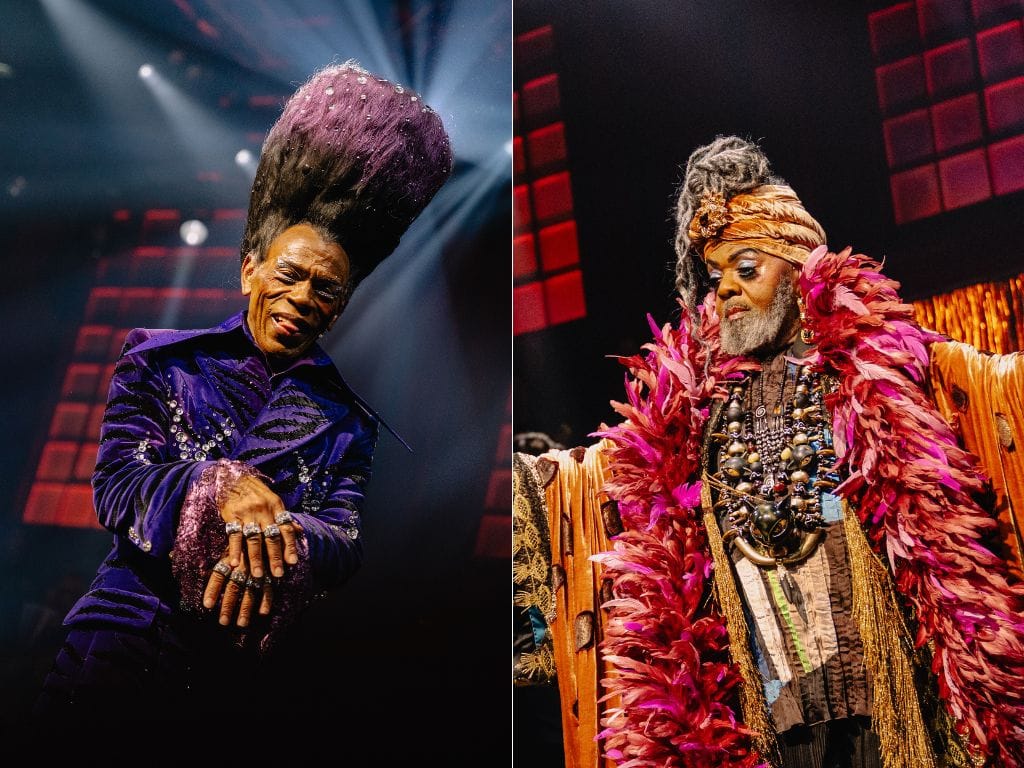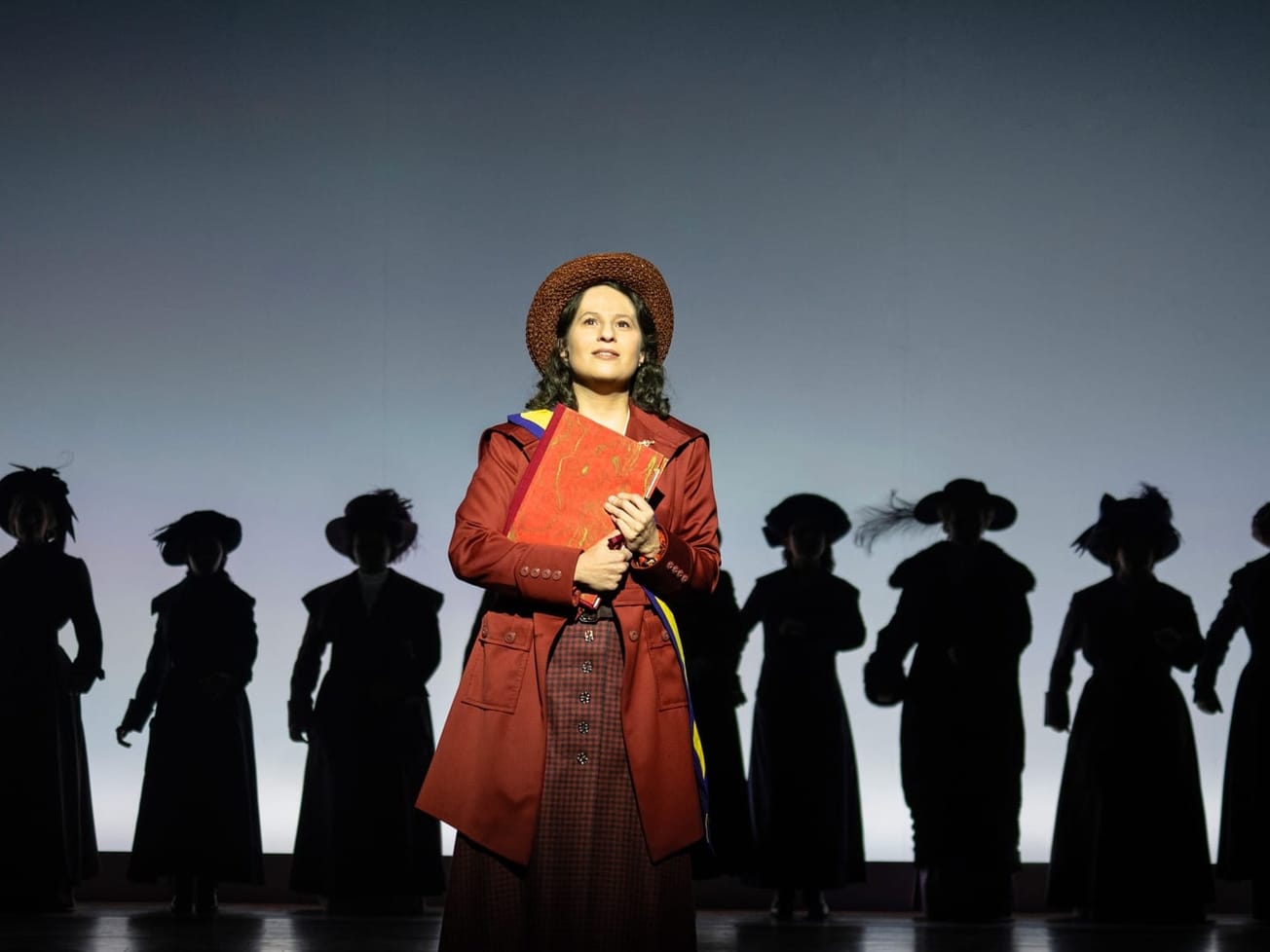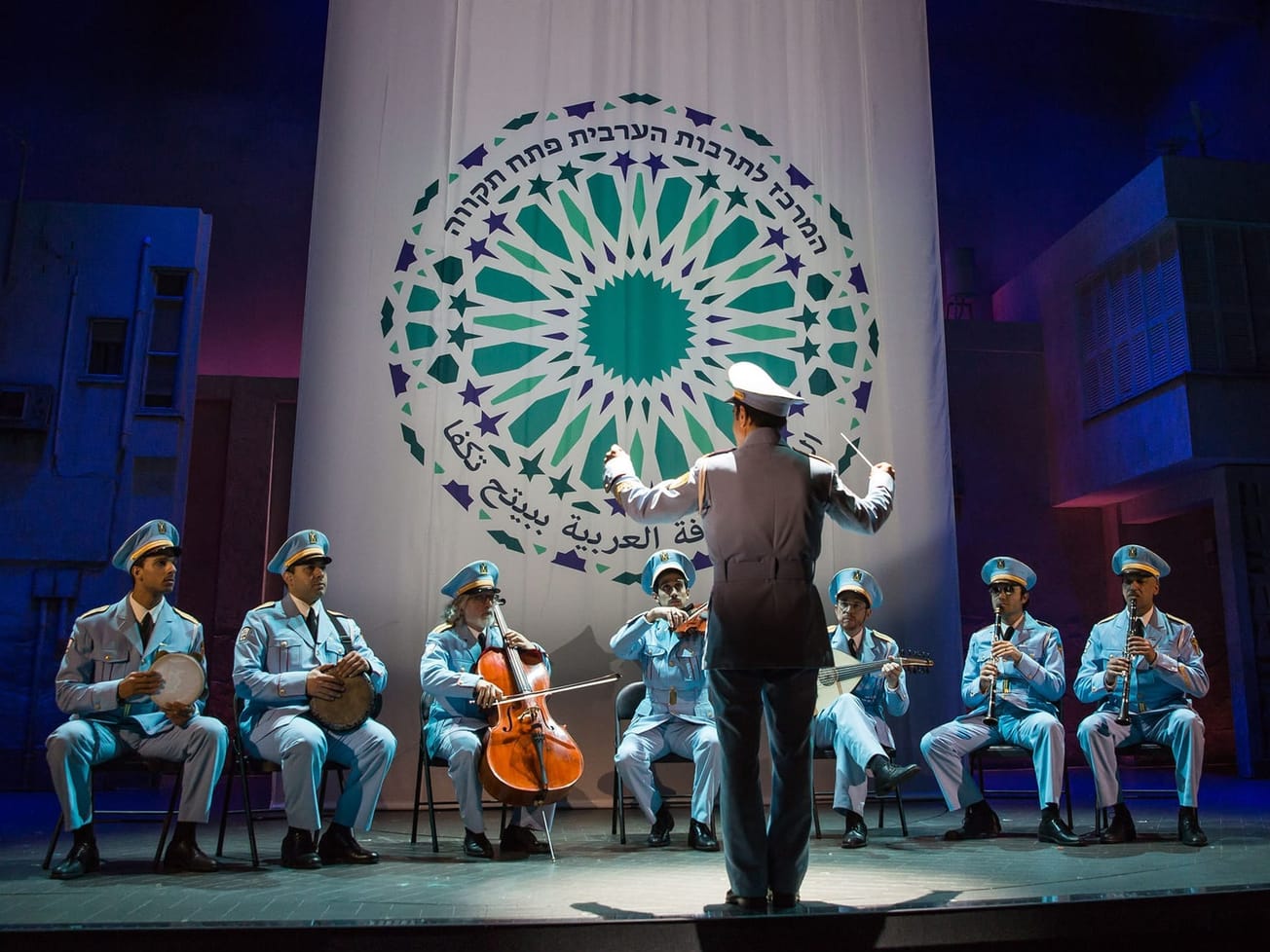
















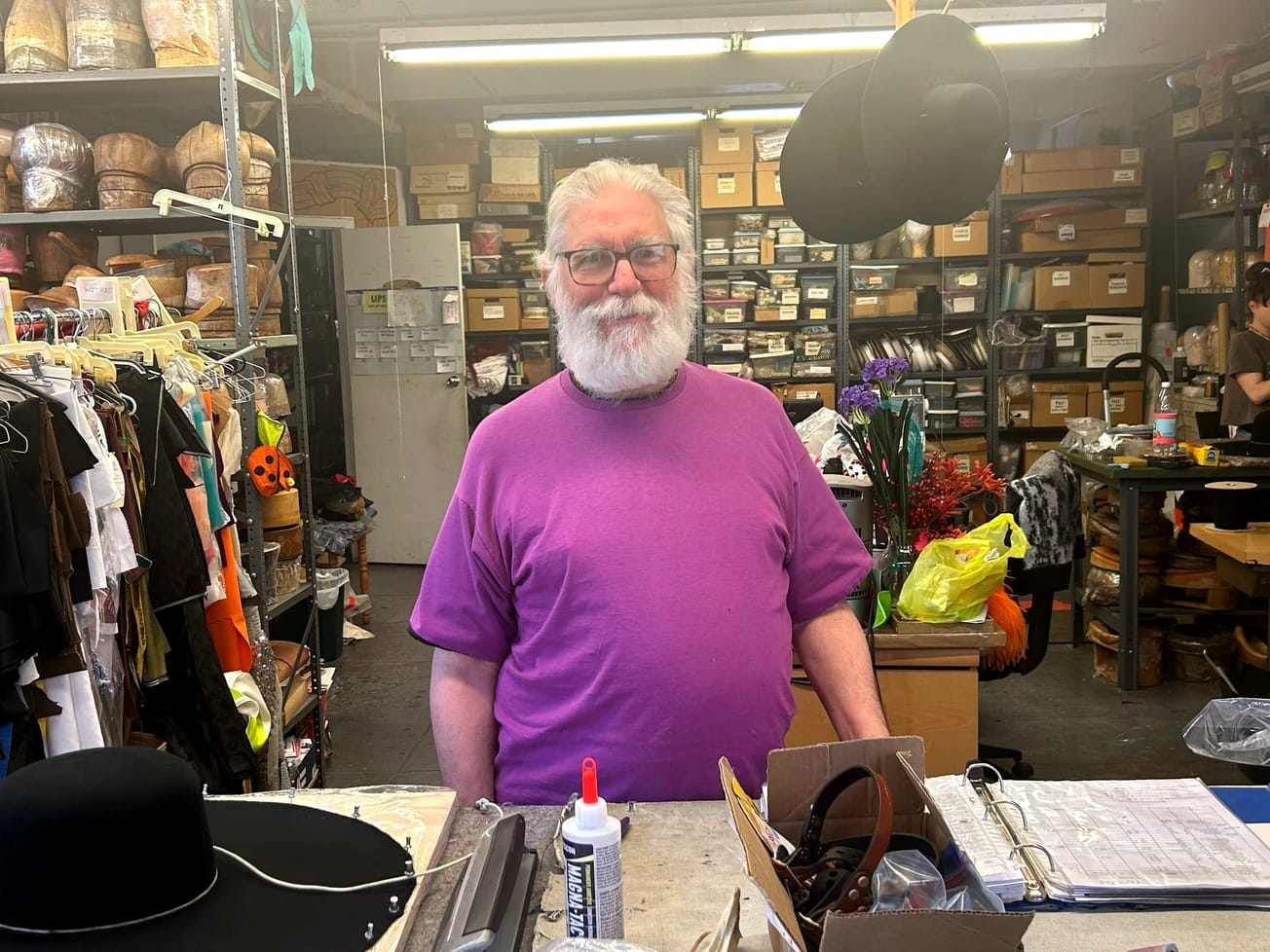
When James Lapine and Stephen Sondheim’s famous character George sings, “Look I made a hat, where there never was a hat,” he’s referring to painting a chapeau on his canvas. But when milliner Arnold S. Levine says the same words, he actually means he made a hat — from scratch.
Levine is a veteran milliner of Broadway, having made hats and head accessories for 15 shows that went on to win the Tony Award for costume design. (Levine has lost track of how many total productions he’s built hats for.) The fuel that has kept Levine making hats for more than 40 years is exactly the sentiment Sondheim captured in those lyrics to his song “Finishing the Hat” — the feeling of having created something from nothing. “It’s immediately finite,” Levine said. “The sooner I can see a piece the happier I am.”
As the owner of Arnold S. Levine Theatrical Millinery and Crafts, Levine splits his time between managerial duties (tracking projects, billing) and crafting (as the shop’s go-to patterner). But creating a whole piece, when he can, still gives Levine a kind of bubbling joy. “I came home from work one day and I said to my partner, ‘I made a hat today,’ and he said, ‘Yeah,’” Levine recalled. “And I said, ‘No, no, no. I sat down, and I made the hat!”
The first time Levine made a hat was during his undergrad at Carnegie Mellon. Having grown up in Stamford, Connecticut, Levine wasn’t far from New York City — which meant he wasn’t far from Broadway. His mother would take him to the city for a meal and a show on many a birthday, and Levine fell in love with the theater. After acting in high school and community theater, Levine enrolled at Carnegie Mellon to become a scenic designer, but discovered his love for costumes through a costume history class and a patterning course.
“All of a sudden, here is this thing that I’d never been exposed to,” Levine remembered. “Pattern drafting — taking numbers and pencil and a piece of paper, and actually being able to make a pattern for a 3D thing — that was fascinating. That’s what tipped it over the edge for set design into costume design.” No matter the field, design students contributed to campus productions; faculty typically directed and designed, but students built. That’s where Levine first made a hat.