


































To look at the year of Paul Tazewell, we’ll rewind to March, when he won the Oscar for his work on the first film of “Wicked,” becoming the first Black costume designer who has won both an Oscar and a Tony Award. Fast forward to June, when Tazewell won his second Tony for his lavish costumes for “Death Becomes Her.” In August, Broadway got to re-appreciate Tazewell's Tony-winning costumes for “Hamilton,” as the show celebrated its 10th anniversary. Now, Tazewell is back in the public eye as “Wicked: For Good” has hit cinemas around the world. And just last week, it was announced that he will be the 2026 recipient of the Sharaff Award for Sustained Excellence in Costume Design from the TDF/Irene Sharaff Awards, which recognize achievement in costume design.
This year marks the first year that a designer has been named Showperson of the Year. To celebrate his achievements, a Special Edition Broadway Briefing was dedicated to Tazewell’s spectacular year, showcasing his incredible craft and creativity. It featured interviews spanning a number of publications and reminders of his many accolades — including his induction into the Theater Hall of Fame and being named in the Out100 list as one of the most impactful and influential people in the LGBTQ+ community.
We begin the celebration with an exclusive essay by Jon M. Chu, director of the films “Wicked” and “Wicked: For Good.”
PAUL TAZEWELL, FAR BEYOND, by Jon M. Chu
History remembers the artists who change how we see. Paul Tazewell is one of those rare figures. His work reshapes culture before anyone realizes it has shifted. He builds the visual language that defines an era. Broadway and beyond felt that undeniable truth in 2025.
When I first sat down with Paul, we did not talk about clothing. We talked about the inner life of a character. He wanted to understand their scars, their victories, the way they viewed the world and the secret forces that pulled them. Paul starts with humanity. Fabric is simply the final form of an idea that emerges from the soul.
When tackling the Wicked Witch of the West, one of the most iconic villains of American storytelling, Paul did something astonishing. He transformed the icon into a person. Through Cynthia Erivo, he built a woman of depth, vulnerability and dignity. She was no longer a legend told in shorthand. She was someone with wounds that shaped her silence and beauty she had to fight to recognize. Watching the world fall in love with green has been one of the great revelations of my life. Paul made that love possible by giving her a truth that lived beneath the color.
The outfits he created for her were not costumes. They became landscapes. Layers of black in intricately pleated textures forming a living architecture that allowed Cynthia to move with confidence and emotional purpose. A cape became a rebel flag of resistance, and Paul even reimagined the witch’s hat in a shape that inspired a subtle tilt of her head in the performance that millions now emulate. His choices become cultural signatures. They spread into toys, tattoos, paintings, merchandise and even theme park architecture. His imagination enters our collective memory with an influence whose true reach we have yet to fully comprehend.
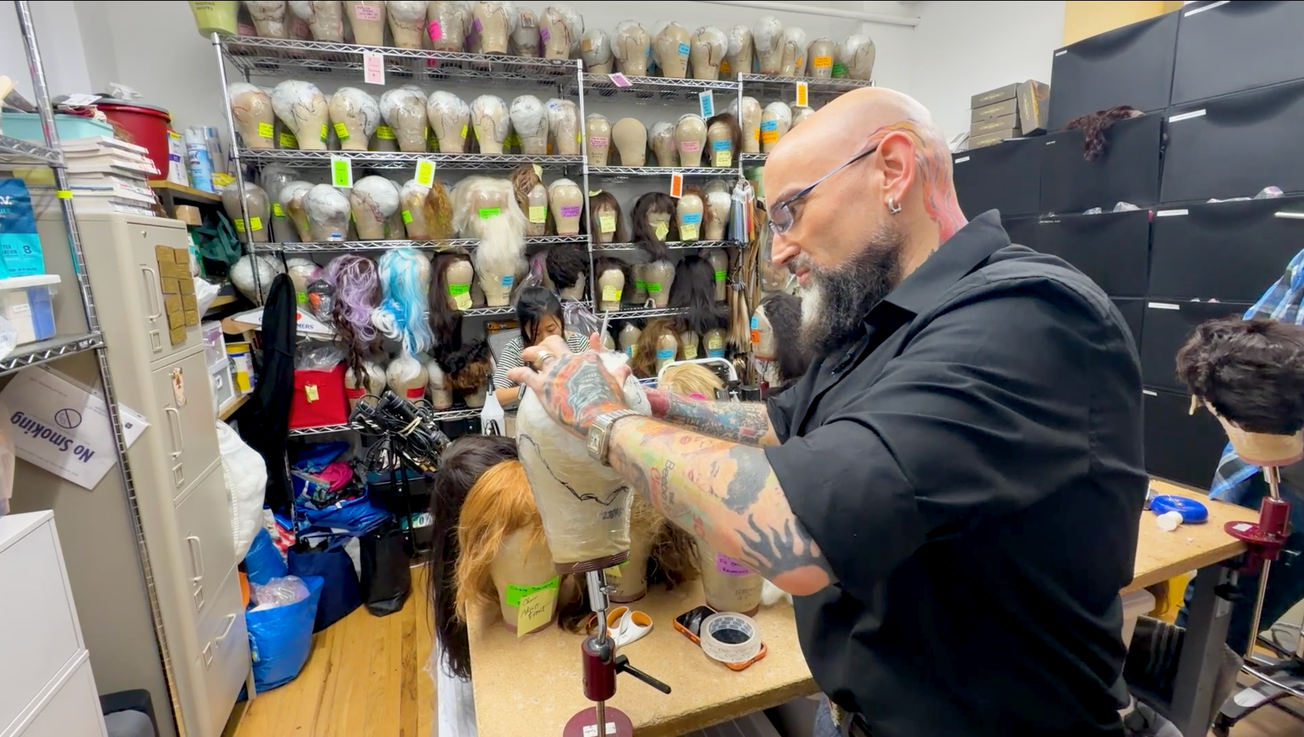
His world of Ariana Grande’s Glinda revealed a different side of his genius. Walking into Paul’s warehouse was like stepping into a cathedral of effervescence. Dozens of dress forms stood surrounded by every shade of pink luminescent shimmer. Artisans carefully painted the pastel edges of butterfly wings by hand. I’ve never witnessed such an extensive exploration of color. The room pulsed with care and devotion and it became clear to me: People worked with such precision because they believed in Paul, and because Paul believed in them. His true magic is that he cultivates spaces where artists feel valued and where creativity is treated with reverence. His storytelling lives in each seam, fold and button.
This year confirmed what many of us have known for years. Paul is a historic figure in design. He became the first Black man to win the Academy Award for costume design. Just a few months later, he won the Tony Award for his work on “Death Becomes Her.” In other words, his work reshaped both stage and screen with equal authority. When Paul joins a project (no matter what medium), the work becomes an audience event. They lean in. He creates a longing for beauty and cohesiveness in design that people feel before they can name it.
His influence now extends into homes across the country. Mainstream clothing companies have invited him to design lines that allows families all over the world to live inside his imagination. My children’s school friends wear patterns he created for “Wicked,” and each time I see it I feel grateful that our culture is better because he exists.
Paul is not simply a designer. He is a cultural architect. He is building a legacy that future generations will study when they ask how Broadway and Film evolved in this era. He is charting new paths with quiet confidence and limitless generosity. But he is giving people, young and old, the shape of possibility. He is shaping not only the stories we tell but the dreams we dare to have. To honor him as the Showperson of the Year is to recognize a truth already written in history that no statue or 500-word essay can truly grasp. Paul Tazewell is a master of imagination and his work and its ripple of inspiration will live far beyond us all. But pay attention, because he’s got a lot more up his sleeve.