














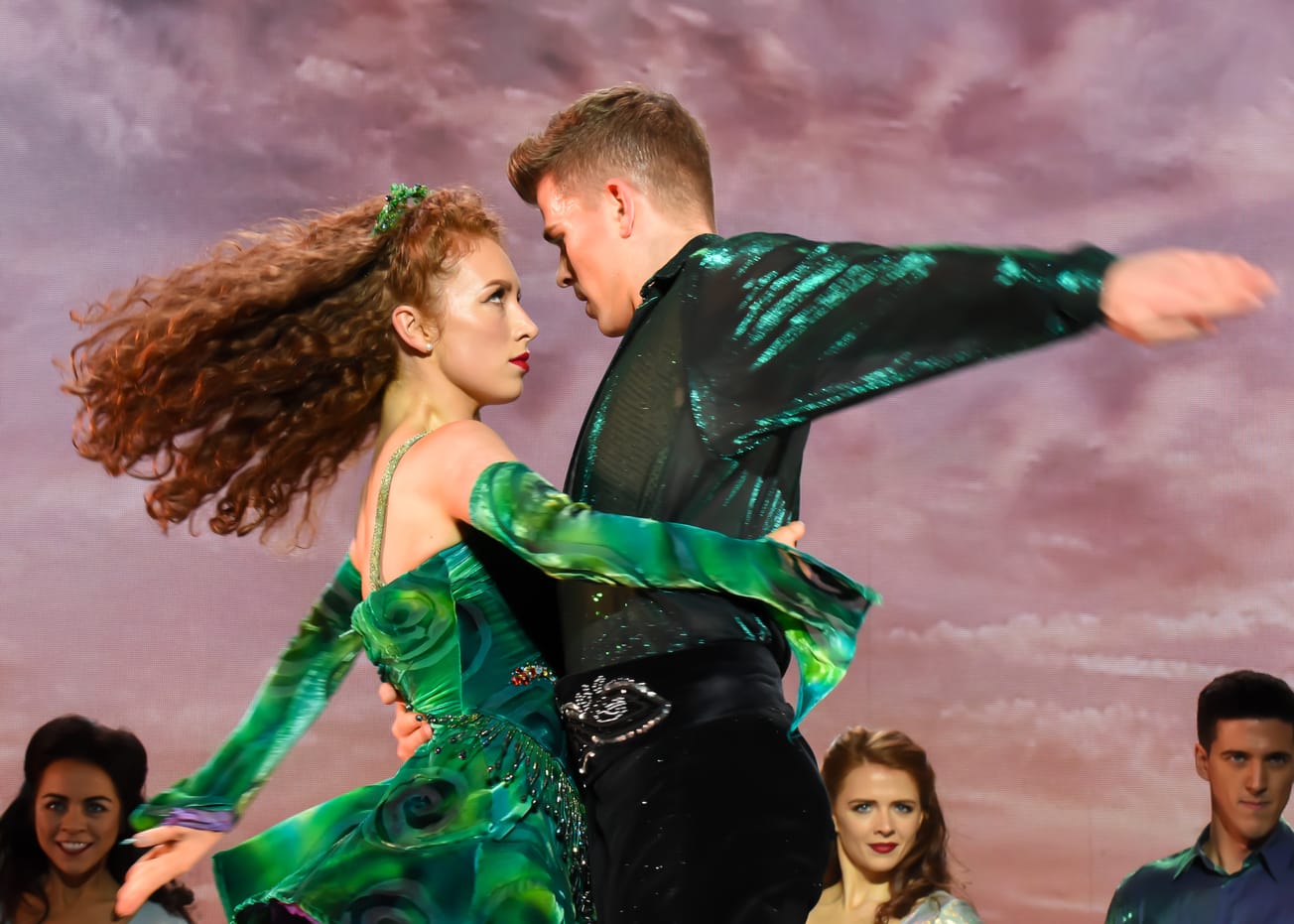
Growing up in Ireland, Pádraic Moyles began Irish dancing when he was three years old, but it wasn’t until the young Pádraic (pronounced Paw-rick) saw “Riverdance” at Radio City Music Hall in 1996 that he fell in love with it. “It was something you were made to do,” Moyles told Broadway News. “I didn’t fall in love with it ’til I saw how ‘Riverdance’ revolutionized Irish dancing.”
Created by composer Bill Whelan, director John McColgan and producer Moya Doherty, “Riverdance” premiered in Dublin in 1995, after this style of Irish dancing (set to Whelan’s music) made a splash during the 1994 Eurovision Song Contest. “Before ‘Riverdance,’ Irish dancing was traditional, and there was a lot of rules and regulations around how that worked, which is amazing — everybody respects the tradition of it,” he continued. “But ‘Riverdance’ brought it to a new level. It made everything limitless.”
Just one year after “Riverdance” changed his life (Moyles’ words), he joined the company as a dancer. Moyles ascended through the ranks, becoming a principal dancer and dance captain. Today, he is the executive producer and associate director of the global phenomenon.
“In traditional Irish dancing, you aren’t a character, you're going [onstage] pretty much blank-faced and you’re just being judged on the dance, not the performance. That’s really the biggest change,” Moyles explained. “And, of course, as more dancers come through this [company], as more dancers grow up with this being their dream, their passion, they bring a totally different sense of what performance looks like. And that is really what helps the show evolve, as well.”
For more than 30 years, “Riverdance” has been touring the world and evolving. Yet its story is deeply rooted in Irish ancestry. “The first half of the show is about myth and legends of not just Ireland, but other territories, as well,” Moyles said. “In the second half of the show, it’s all about departure and discovery — kind of post-famine where everybody had to leave Ireland.”
But Moyles hopes that the story will resonate with anyone who has ever left hardship to seek opportunity elsewhere. Through its choreography, “Riverdance” conveys our common humanity. In a number called “Trading Taps” American-tap dancers and Irish dancers duel, “yet through the duel, they realize how similar they are,” Moyles said. “It’s about rhythm. It’s all about movement. It’s all about expressing yourself. The next thing you know, they’re all doing the same rhythms just in different ways. It can be the way language works — we’re all saying the same thing just in different ways.”