


































In “Chess,” the song “Someone Else’s Story” has been performed, throughout the musical’s many major presentations over the years, by either the character of Florence in the first act or Svetlana in the second act. Sometimes it includes additional lyrics, other times it’s also delivered as a reprise. The 2025 revival sees Lea Michele’s Florence pulling off the ballad late in Act 2 — as the 11 o’clock number, no less.
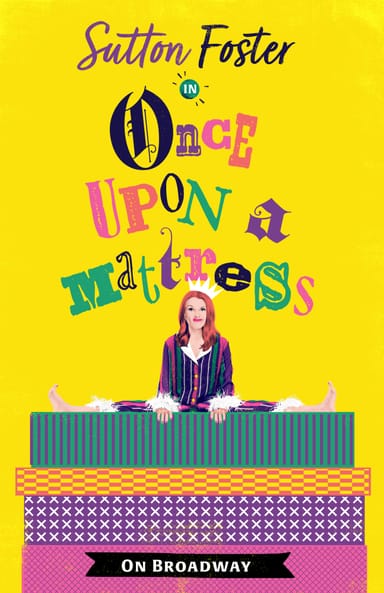
This new version of “Chess” is Broadway’s latest revised musical revival — or revisal, rather — in recent seasons, following 2025’s “Pirates! The Penzance Musical” and 2024’s “Once Upon a Mattress” and “The Wiz.” Previously, such overhauls have occasionally led to notable success. (After all, the revisal of “Chicago” has been playing on Broadway since 1996.)
Yet whether making tiny tweaks or thorough transformations, experts agree that how you go about making these modifications matters as much as the changes themselves, and that how you handle the process — from securing permissions from rightsholders to negotiating new elements — must be handled with care.
“What we’re really dealing with here is people’s feelings,” said Jenny Gersten, a producer of last season’s “Mattress” revival that was adapted by Amy Sherman-Palladino. “In this job, the relationships are important. And if you’re having conversations where you’re pushing for things that might make someone uncomfortable, those things have to be in the hands of someone who [rightsholders] deem trustworthy.”
Initiating the ask
A request to alter an existing musical must first be granted by the work’s rightsholders — either its living authors or their respective estates, usually represented by an agent, lawyer or heir. The more authors who once collaborated on a musical, the more representatives who must approve its revisal (though if you’re only changing dialogue, you only need the book writer/estate’s approval, etc.).
“It can be tricky to ask for changes,” warned Gersten, who is also the artistic director of New York City Center’s Encores! series, which stages concert adaptations of musical revivals. “There's a romantic wanting to hold on to the thing that was, or a nervousness about wanting to adjust material that the authors who are deceased wouldn’t have wanted. Go slowly, and take it step by step if you need to.”
These amendment requests are often liaised through a work’s theatrical licensing company, but in some cases, the appeal must be made directly to living authors. For example, Danny Strong traveled to London to speak with “Chess” lyricist Tim Rice about spearheading a potential rewrite.